
Will Your Gas Water Heater Keep Running When the Power Goes Out?
A naturally vented, standing-pilot tank with mechanical controls can generally keep heating. Warm tap water alone may be the tank's stored reserve.
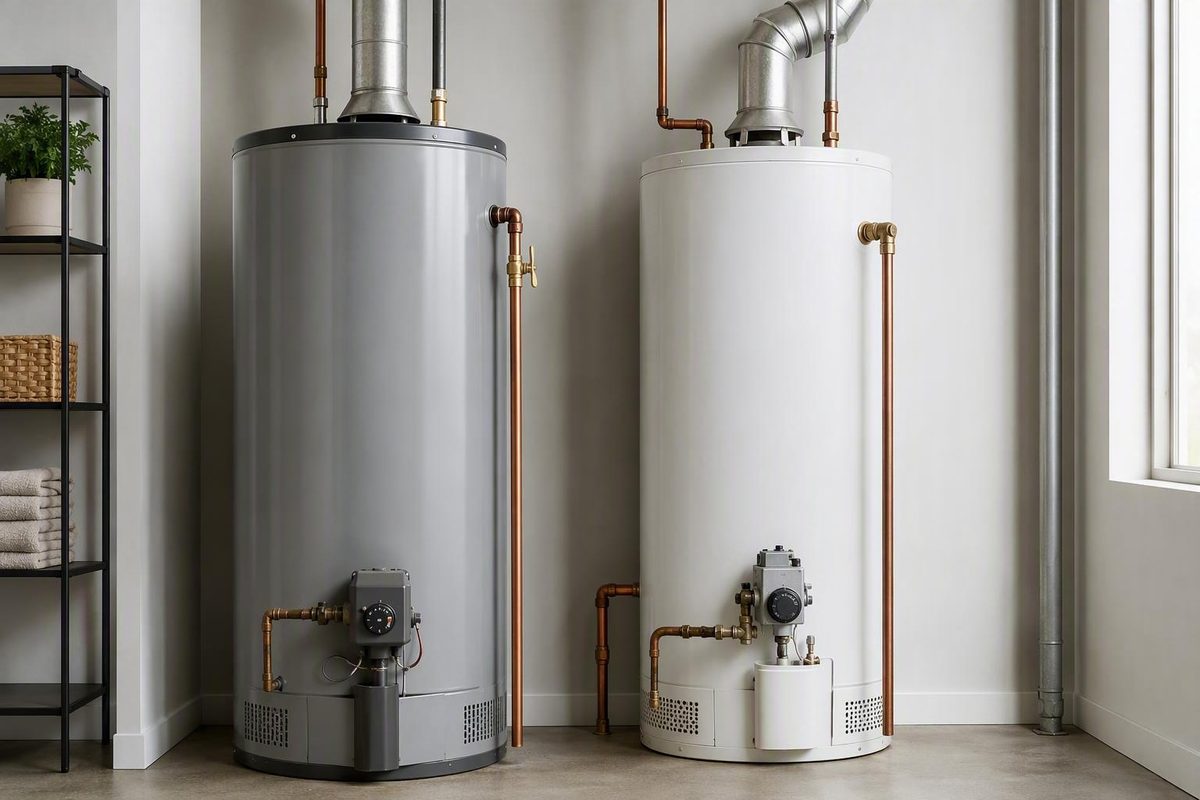
The short answer: it depends on ignition, controls, and venting
Some gas water heaters work without household electricity; others stop heating when the power goes out. The deciding factor is not simply whether the appliance burns natural gas or propane. It is whether electricity is required to ignite the burner, operate the controls and safety systems, or move exhaust outdoors.
A traditional storage-tank water heater can generally continue heating during an outage when it has all three of these characteristics:
- A continuously burning standing pilot
- A mechanical gas control and thermostat
- Natural-draft venting, with no powered exhaust blower or damper
Even then, operation depends on an available gas supply, a working pilot and safety mechanism, adequate combustion air, and an intact venting system.
A gas heater will normally stop heating if it depends on electronic ignition, electronic controls, safety electronics, a powered damper, or an exhaust blower. That includes most gas tankless units and many power-vented, condensing, and newer storage-tank models. The exact configuration matters more than the fuel label (overview of gas water-heater electrical requirements).
To predict what will happen during an outage, separate three questions:
- Is previously heated water still available? A storage tank may remain full of warm water after the power fails.
- Can the burner ignite or relight? An electronic ignition system normally cannot start a flame without power.
- Can the heater complete normal heating cycles? Required controls, sensors, powered dampers, or blowers may prevent operation even if hot water remains in the tank.
This distinction explains why hot water may continue flowing temporarily even though the heater has stopped reheating. It also explains why a standing pilot is useful evidence but not conclusive proof that the whole appliance is electrically independent.
Your heater’s data plate, operating instructions, electrical specifications, and exact manufacturer manual take precedence over general category descriptions. Individual gas appliances can behave differently during an outage, so model-specific documentation should control the decision (NW Natural’s power-outage guidance).
Which gas water heaters usually work during an outage?
The following table describes common configurations, not guarantees. Manufacturers can combine ignition, control, and venting technologies in different ways, so verify each feature before relying on a heater during a blackout.
| Configuration | Typical electrical dependency | Likely outage behavior | What the homeowner should verify |
|---|---|---|---|
| Naturally vented storage heater with a standing pilot and mechanical controls | Usually little or no household electrical dependency | Can generally ignite the main burner and reheat the tank | Confirm that there is no required cord, blower, powered damper, electronic control, or other electrical component |
| Storage heater with electronic ignition | Electricity is needed for ignition and usually burner control | Stored hot water may remain available, but the burner normally cannot relight | Check the ignition description, electrical rating, outage instructions, and model-specific operating sequence |
| Power-vented storage heater | Electricity powers the exhaust blower and commonly the controls | Normally stops heating when power is lost | Confirm the blower and control requirements in the manual |
| Condensing gas heater | Usually uses powered controls and combustion or exhaust equipment | Generally stops heating without electricity | Check the electrical supply, ignition, venting, shutdown, and outage requirements |
| Gas tankless heater | Usually depends on electronic ignition, sensors, controls, and often a blower | Normally stops producing newly heated water | Check the exact model’s electrical specifications and approved backup options |
| Unusual or hybrid configuration | Varies by design | Cannot be predicted reliably from fuel type or appearance | Use the complete model number and manufacturer documentation |
Naturally vented standing-pilot storage heaters
This is the configuration most likely to continue working. A small pilot flame remains available to light the main burner, mechanical controls respond to tank temperature, and combustion gases leave through a natural-draft vent rather than an electric blower.
If the heater has no other required electrical component, it can generally complete repeated heating cycles during an outage. It is not necessarily limited to the water that was already hot when the outage began.
Electronic-ignition storage heaters
An electronic-ignition heater still stores water, so it may initially appear unaffected. Opening a faucet can deliver water heated before the blackout.
The limitation becomes apparent when the tank cools and the burner needs to restart. Without electricity, the ignition system and associated controls normally cannot begin another heating cycle. The remaining hot water is therefore a declining reserve rather than a continuously replenished supply. Modern gas models may require electricity for ignition, safety features, control panels, or ventilation equipment even though gas supplies the heat (Ace Hardware Home Services’ outage guide).
Power-vented storage heaters
A power-vented model burns gas, but an electric blower moves combustion products through the vent system. If the blower cannot operate, the appliance normally cannot complete its designed firing sequence.
Ignition and venting are separate dependencies. A pilot flame, if present on a particular design, does not establish that the heater can run without the powered venting equipment. Confirm the requirements for the exact model rather than attempting to operate it without the blower.
Condensing gas heaters
Their designs vary, so they should be described as usually power-dependent, not universally identical.
Check the manual for the electrical supply, ignition sequence, venting requirements, outage shutdown, and permitted restart procedure. A storage tank does not by itself establish that the heater can operate without power.
Gas tankless heaters
Most gas tankless heaters require electricity. Opening a hot-water faucet must trigger flow detection, ignition, flame and safety monitoring, temperature regulation, and often a combustion blower.
A tankless heater also lacks a large stored reservoir. When electrical operation is lost, a typical unit cannot keep producing newly heated water. Some models may work with a compatible backup source, but grid-free operation should never be assumed.
Why a standing-pilot heater can run without household power
A standing-pilot system uses a small flame that burns continuously. When water in the tank cools enough for the thermostat to call for heat, the gas control supplies fuel to the main burner and the pilot ignites it.
Although this arrangement can generate a small electrical current internally, it does not necessarily draw electricity from the house. The pilot flame heats a thermocouple or thermopile, which produces the small electrical output used by the gas safety mechanism.
In simplified terms:
- The pilot flame heats the thermocouple or thermopile.
- The heated component produces a small current.
- That current helps keep the safety portion of the gas valve open.
- If the pilot goes out, the component cools.
- Its output falls, and the valve is intended to close.
A mechanical thermostat and gas control can then regulate the main burner according to tank temperature without a household electrical circuit. This flame-proving principle distinguishes a traditional standing-pilot arrangement from electronic ignition (explanation of standing-pilot and electronic-ignition systems).
Common electronic alternatives include:
- Hot-surface ignition: Electricity heats an ignition element that lights the burner.
- Intermittent-pilot ignition: An electronic system establishes a pilot flame only when heat is required.
These systems need electricity from the household supply or a compatible alternative source. Their electronic controls may also manage temperature, flame verification, and the gas-valve operating sequence.
A standing pilot alone does not prove outage capability. The same appliance may also have an electric blower, powered damper, control module, or another component required for operation. Evaluate the complete heater, not just the visible flame.
How to tell whether your water heater needs electricity
Use a non-invasive inspection. Do not remove service covers, disconnect venting, open the gas control, or modify the appliance to determine how it works.
1. Identify whether it is a tank or tankless unit
A conventional storage heater has a large insulated tank.
A tankless design strongly suggests electrical dependence, but the exact model still matters. A storage tank does not prove independence because tank models can also use electronic ignition and power venting.
2. Look for an electrical connection
Without unplugging or disturbing anything, look for:
- A power cord leading to a receptacle
- A junction box or electrical conduit
- A nearby service switch
- An external transformer or control module
A cord or hardwired connection is strong evidence that some part of the appliance uses electricity. It does not tell you exactly what the connection powers or whether that function is essential, so continue checking.
3. Check for electronic controls
Possible signs of electronic operation include:
- A digital temperature display
- Status or diagnostic lights
- Push-button controls
- An error-code panel
- A remote controller
- An electronic-ignition label
- A visible control enclosure
The absence of a display does not prove that the heater is mechanically controlled.
4. Look and listen for powered venting
A tankless or condensing heater may have its blower inside the cabinet.
That is evidence of powered combustion or exhaust equipment.
Do not disconnect, block, reroute, or alter the vent to see whether the burner will operate without the blower. Proper combustion ventilation remains necessary during an outage, and required venting components should not be bypassed (gas water-heater outage and safety guidance).
5. Identify the ignition type
Read the operating label or the ignition section of the manual. Useful terms include:
- Standing pilot
- Continuous pilot
- Intermittent pilot
- Electronic ignition
- Direct spark ignition
- Hot-surface ignition
Instructions for observing and relighting a continuously burning pilot may indicate a traditional standing-pilot arrangement. References to an electronic igniter, operating sequence, or error code indicate an electrical dependency.
A visible pilot is evidence, not proof. Other essential components may still require electricity.
6. Find the data plate and model number
Record the complete model number. If necessary to locate the correct manual, record the serial number as well.
In the documentation, check headings such as:
- Electrical supply
- Ignition system
- Venting or combustion air
- Sequence of operation
- Power failure or outage
- Shutdown
- Pilot lighting
- Restart after interruption
- Troubleshooting
- Backup-power restrictions
Use the manual for the exact model, not a broad product-family brochure. Documentation is more reliable than estimating from the heater’s age, appearance, fuel label, or visible pilot.
7. Use this compact decision tree
Is the heater tankless?
- Yes: It most likely requires electricity. Confirm the electrical specifications and any approved backup options.
- No: Continue.
Does it use electronic ignition?
- Yes: It normally cannot relight the burner without power, although previously heated tank water may remain available.
- No, it has a standing pilot: Continue.
Does it use a powered blower or damper?
- Yes: It is normally electricity-dependent even if a pilot remains lit.
- No: Continue.
Does the manual identify another required electrical control or safety component?
- Yes: Follow the manufacturer’s outage instructions and do not assume normal operation.
- No: A naturally vented, mechanically controlled standing-pilot heater can generally continue heating if its gas supply, pilot, safety mechanism, combustion air, and venting remain functional.
If the design is still unclear, contact the manufacturer with the model number or ask a qualified service professional. Do not classify a combustion appliance through trial-and-error ignition, unplugging, or vent modification.
Stored hot water is not the same as continued heating
Hot water at a faucet after the lights go out does not prove that the water heater is operating.
A storage tank may contain water heated before the outage. That water remains available through the plumbing even if the burner can no longer ignite. As hot water is used, colder incoming water replaces it and reduces the tank’s remaining useful heat.
Keep three conditions separate:
- Stored heat remains: The tank still contains water warmed before the outage.
- The burner can relight: The ignition and flame-proving systems can start another firing cycle.
- Normal reheating continues: The heater can repeatedly ignite, vent, regulate, and shut down as designed.
An electronic-ignition tank heater may satisfy only the first condition during an outage. A naturally vented standing-pilot model with mechanical controls may satisfy all three. A power-vented model may retain stored hot water but remain unable to fire because its blower has no power. Conventional tanks store a reserve, while a gas tank heater with an electrically powered ignition component requires electricity to resume heating (comparison of water-heater behavior during outages).
There is no universal estimate for how long stored water will remain useful. The result depends on:
- Tank size
- Insulation
- Water temperature before the outage
- Incoming cold-water temperature
- Household hot-water use
- Mixing of hot and cold water at fixtures
- The tank’s condition and location
Conserving hot water can extend the usefulness of the stored supply, but it cannot make a disabled burner reheat the tank.
Tankless heaters do not maintain a comparable reservoir.
Do not use faucet temperature as a test of ignition or venting. It tells you that the water is warm, not whether the burner has fired or the combustion system is operating correctly.
Why gas tankless water heaters usually stop without power
In a gas tankless heater, gas supplies the combustion heat while electricity coordinates the process.
A typical sequence is:
- Someone opens a hot-water tap.
- A flow sensor detects water moving through the unit.
- The control board determines that heat is needed.
- The electronic ignition lights the burner.
- Safety systems verify operation.
- Temperature and flow sensors provide feedback.
- The control system adjusts burner output.
- A blower, where fitted, manages combustion or exhaust.
- The burner shuts down when hot-water flow stops.
Common electrical loads include the igniter, control board, display, flow and temperature sensors, safety systems, and often an exhaust blower. A. O. Smith explains that electricity performs these ignition, sensing, control, safety, and venting functions even though gas heats the water (manufacturer explanation of tankless electrical operation).
When power fails, the system generally cannot complete one or more required steps. Depending on its design, it may be unable to detect demand, initiate and verify ignition, regulate water temperature, or operate powered venting. Its normal response is therefore to stop firing.
Because a tankless heater has no stored reservoir, it also lacks the temporary reserve that can make a disabled storage heater appear functional.
Do not use a generic electrical figure to select backup power. Electrical requirements and operating characteristics vary by model. Use the rating label and manual for the exact unit.
A compatible battery system, uninterruptible power supply, or generator may support some tankless heaters. That does not make them electrically independent; it means their required electricity is coming from an alternative source.
What to check during a power outage
Begin with identification rather than experimentation. If you have not confirmed the heater’s design, treat its outage capability as unknown.
Outage checklist
- Heater type: Is it a storage-tank or tankless unit?
- Ignition: Does the manual specify a standing pilot or electronic ignition?
- Electrical dependency: Is the heater plugged in or hardwired?
- Powered venting: Is a blower or powered damper part of the design?
- Gas availability: Is the fuel supply available and undisturbed?
- Pilot status: If the appliance has a standing pilot, is it operating as described in the instructions?
- Combustion air: Are the normal air openings unobstructed?
- Venting: Is the vent system visibly intact and unobstructed?
- Manufacturer instructions: Does the manual provide outage, shutdown, relighting, or restart directions?
- Abnormal behavior: Is the heater repeatedly shutting down, displaying a fault, or failing to follow its documented sequence?
A standing-pilot heater can operate only while gas remains available and its pilot, safety mechanism, combustion-air supply, and venting remain functional. The loss of household power does not remove the need for proper combustion and exhaust flow.
Do not:
- Bypass a switch, interlock, sensor, or control
- Attempt to run a power-vented heater without its blower
- Disable a powered damper
- Alter or disconnect vent piping
- Hold a gas valve open
- Manually light a burner designed for electronic ignition
- Substitute a generic lighting procedure for the appliance instructions
Guidance for gas water heaters specifically warns against bypassing controls or manually lighting electronically ignited equipment and emphasizes the continuing need for proper ventilation (Meticulous Plumbing’s outage safety guidance).
If a standing pilot has gone out, use only the lighting procedure printed on the appliance or provided in the exact manual—and only when those instructions authorize the owner to relight it. Do not attempt to create a flame manually in a heater designed for electronic ignition.
Stop using the appliance and seek qualified help if it does not operate according to its documentation or if you have concerns about combustion or venting. An outage is not a reason to override a safety control or operating lockout.
Can a battery, UPS, or generator keep the heater running?
A compatible battery system, uninterruptible power supply, or generator may support some electronic-ignition storage heaters, power-vented models, and gas tankless units. Compatibility is model-specific. The presence of an ordinary plug does not establish that every backup device is suitable.
Before choosing backup power, verify from the exact model’s documentation:
- Required voltage and frequency
- Grounding requirements
- Normal electrical load
- Startup or blower demand
- Manufacturer restrictions on backup sources
- Whether other required components must also remain powered
- The approved connection method
- Expected demand during actual heater operation
A tankless heater may also require power throughout water use for sensing, control, and modulation—not merely for a momentary ignition event.
Do not infer a universal backup size or runtime from specifications for another heater. The available evidence supports the possibility of backup operation, but not a single device, capacity, or connection arrangement suitable for every model.
Plan before an outage. Record the full model number, obtain its electrical specifications, and confirm compatibility with the manufacturer or a qualified professional. Do not use backup power to defeat the heater’s ignition, safety, control, or powered-venting functions.
The principle is straightforward: gas may provide the heat, but every electrical function required by the appliance must still receive suitable power.
Conclusion
Whether a gas water heater works without electricity depends on its complete design—not fuel type alone. A naturally vented storage heater with a standing pilot and mechanical controls can generally continue heating if its gas supply, pilot, safety mechanism, combustion air, and venting remain functional.
Electronic-ignition, power-vented, condensing, and most gas tankless heaters usually need electricity. A storage model may continue delivering previously heated water even when it cannot relight, so warm water at a faucet should not be mistaken for proof of active reheating.
Inspect the appliance only from the outside, identify its model number, and follow the exact manual. Any backup-power or relighting plan must preserve the heater’s designed ignition, control, safety, and venting functions.
Frequently asked questions
Does a standing-pilot gas water heater always work without electricity?
No. A standing pilot makes power-independent operation possible, but it does not guarantee it.
A traditional storage heater can generally continue heating when it has mechanical controls and natural venting with no powered components. It still needs gas, a working pilot and safety mechanism, adequate combustion air, and proper venting. A blower, powered damper, electronic control, or another electrical dependency can still prevent outage operation.
Does a plugged-in gas water heater stop working during a power outage?
Usually, if the connection powers a function required for ignition, control, safety, or venting. The heater may still deliver water already stored in its tank, but its burner may be unable to relight.
Check the manual to determine what the connection powers and whether the manufacturer permits operation from a compatible backup source.
Will a gas tankless water heater work without electricity?
Most will not. Gas tankless heaters generally need electricity for flow detection, ignition, controls, sensors, safety functions, and often an exhaust blower.
Because they have no stored hot-water reservoir, loss of electrical operation usually means loss of newly heated water. Some models may work with correctly specified backup power.
Can I still use hot water already stored in the tank?
Generally, yes. Water heated before the outage may remain available even if the burner cannot restart. It will cool and will be diluted as hot water is drawn and replaced by colder incoming water.
How long it remains useful depends on the tank, insulation, starting temperature, incoming-water temperature, and household demand. Warm water at the faucet does not prove that the heater is actively firing.
Can I connect my gas water heater to a battery backup, UPS, or generator?
Possibly, but only if the source and connection are compatible with the exact heater. Verify the required voltage, grounding, operating load, startup demand, connection requirements, and manufacturer restrictions.
Do not rely on a universal backup size or use backup power to bypass the heater’s ignition, safety, control, or powered-venting systems. Confirm the arrangement with the manufacturer or a qualified professional before an outage.