
Choose DuraVent Stove Pipe by Clearance and Chimney Connection
Compare DuraVent DVL and DuraBlack stovepipe, check their clearances, and identify the right connection to DuraPlus or DuraTech chimney.
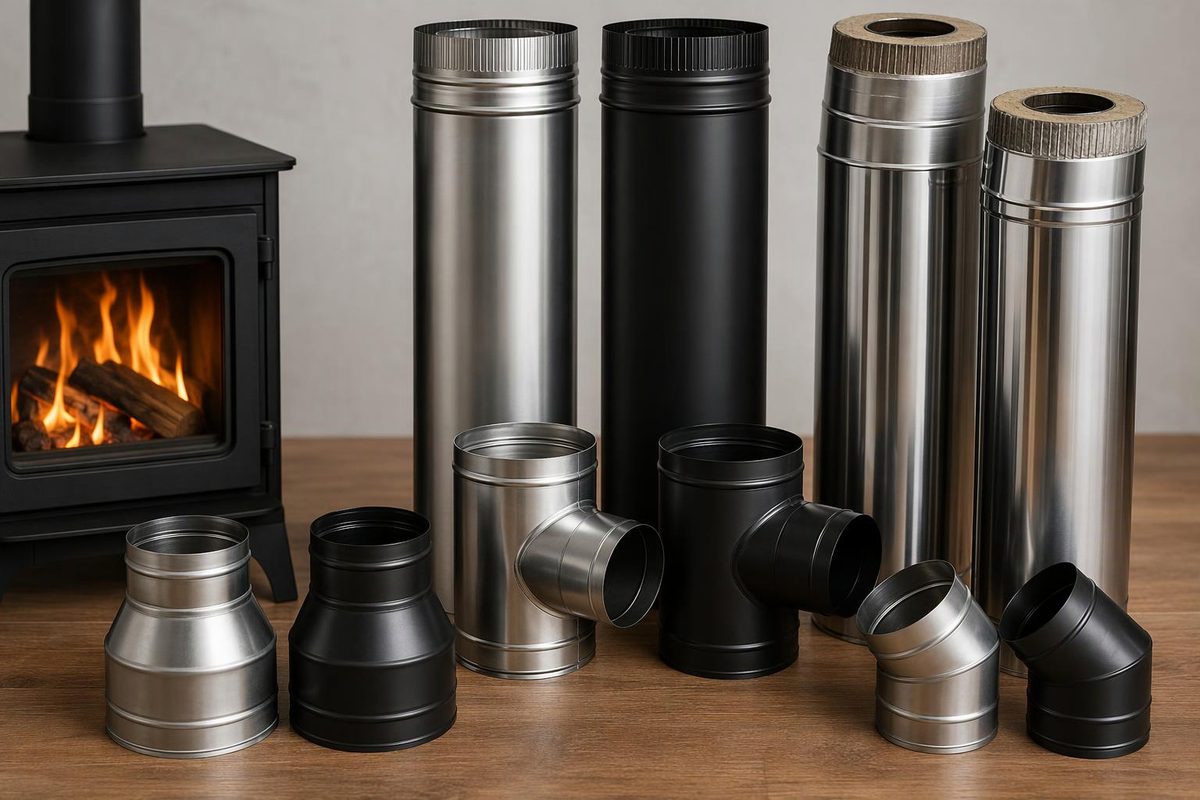
For a wood stove, the main DuraVent connector choices are DVL double-wall stovepipe and DuraBlack single-wall stovepipe. Choose between them by the stove’s approved venting, available clearance and connection to the chimney—not simply by pipe color or diameter.
DVL is the close-clearance option. DuraBlack is the economical single-wall option where its larger clearance can be maintained. Both are interior connectors between the stove and chimney, not replacements for the chimney itself. (DVL specifications, DuraBlack specifications)
DVL vs. DuraBlack: the differences that affect fit
| Check | DVL | DuraBlack, standard black steel |
|---|---|---|
| Construction | Double-wall, air-insulated; stainless-steel inner wall and black-painted galvanized outer wall | Single-wall, 24-gauge steel, painted black |
| Pipe clearance | 6 inches to combustible walls; 8 inches to combustible ceilings, including cathedral ceilings | At least 18 inches to combustibles |
| Diameter range | 6–8 inches | 6–10 inches |
| Main reason to choose it | Reduced connector clearance; retains more heat in the flue gases | Economical connector where single-wall pipe is permitted and space is available |
These specifications come from DuraVent’s DVL product information, DuraBlack product information and DuraBlack installation instructions.
The pipe’s clearance does not establish the stove’s clearance. Check the appliance manual separately for the stove body, connector arrangement and any required heat shields. Follow both manufacturers’ instructions and consult local building or fire officials about permits, restrictions and inspection. (DVL instructions, DuraBlack instructions)
For example, a route with 10 inches between the pipe’s outer surface and a combustible wall fails DuraBlack’s 18-inch requirement. It may satisfy DVL’s wall-clearance requirement, but that alone does not approve the stove position or the rest of the installation.
DuraVent also specifies DVL for solid-fuel appliances installed in mobile homes. The stove must itself be approved for that use; installing DVL does not make an otherwise unsuitable stove acceptable. (DVL mobile-home requirements)
Match the chimney connection before buying an adapter
“DuraVent chimney adapter” is not a universal part description. Identify the exact chimney family, diameter and support or finishing component first.
Connecting to DuraPlus
DuraPlus requires an approved transition from connector pipe to chimney. Its product guidance identifies a DVL/DuraBlack chimney adapter or DuraBlack slip connector for the applicable connection; the DVL instructions show adapter connections to DuraPlus. Match the transition to the connector and receiving component—do not assume bare stovepipe can simply be pushed into the support. (DuraPlus connection requirements, DVL connection details)
One shared adapter family is the DVL/DuraBlack Chimney Adapter with Trim, with catalog numbers 6DVL-ADC, 7DVL-ADC and 8DVL-ADC. Despite the DVL prefix, DuraVent describes this adapter for either DVL or DuraBlack. Select it only after confirming the receiving chimney component. (DVL adapter catalog)
Connecting to DuraTech-family supports
The 2024 DVL and DuraBlack instructions state that DuraTech, DuraTech Canada and DuraTech Premium supports have a built-in flue extension. In that arrangement, the top connector section fits over the extension and is secured as instructed; a separate DVL/DuraBlack adapter with trim is not needed. (DVL instructions, DuraBlack instructions)
DuraVent specifically says not to use the DVL/DuraBlack adapter with trim with DuraTech Canada or DuraTech Premium. Those systems have their own connection details. (Adapter bulletin)
For an existing installation, check the actual support and its matching instructions. The chimney name alone does not tell you which connection hardware is present. Do not transfer an adapter recommendation from DuraPlus to a DuraTech-family installation without checking.
Keep the product families separate
Within the connector run, DVL’s instructions prohibit mixing it with single-wall stovepipe or other products. They also prohibit cutting DVL pipe, enclosing the connector, or passing it through walls, ceilings, attics or closets. Use its adjustable or telescoping sections to obtain the required length. A through-wall route needs the approved chimney and penetration components—not DVL threaded through a wall opening. (DVL installation limits)
If the appliance burns pellets, start with its approved pellet-vent system instead. DuraVent’s PelletVent Pro is a separate family designed for pellet and specified other fuels; it is not another name for DVL. See our pellet-stove pipe guide for that decision. (PelletVent Pro applications)
Check these items before ordering
- Stove: exact model, outlet diameter and approved connector type. DuraVent says connector and chimney diameter should match the appliance outlet; do not reduce diameter merely to reuse existing pipe. (Sizing guidance)
- Room: clearance along the whole route, including elbows and the ceiling—not just behind the stove.
- Chimney: family, diameter, support or finishing-component identification, and whether a flue extension is already present.
- Length and access: installed dimensions, required joint overlap, and a way to inspect and clean the connector. DVL requires cleaning access and cannot be cut. (DVL instructions)
If the existing chimney or support cannot be identified, stop before buying transition parts. Have a qualified hearth installer identify the system and confirm the connection against its instructions and local requirements.