
Fireplace Stove Pipes: Connector, Chimney or Liner?
Identify the right fireplace or stove pipe by fuel, appliance and vent route. Check connector limits, clearances, sizing and replacement compatibility.
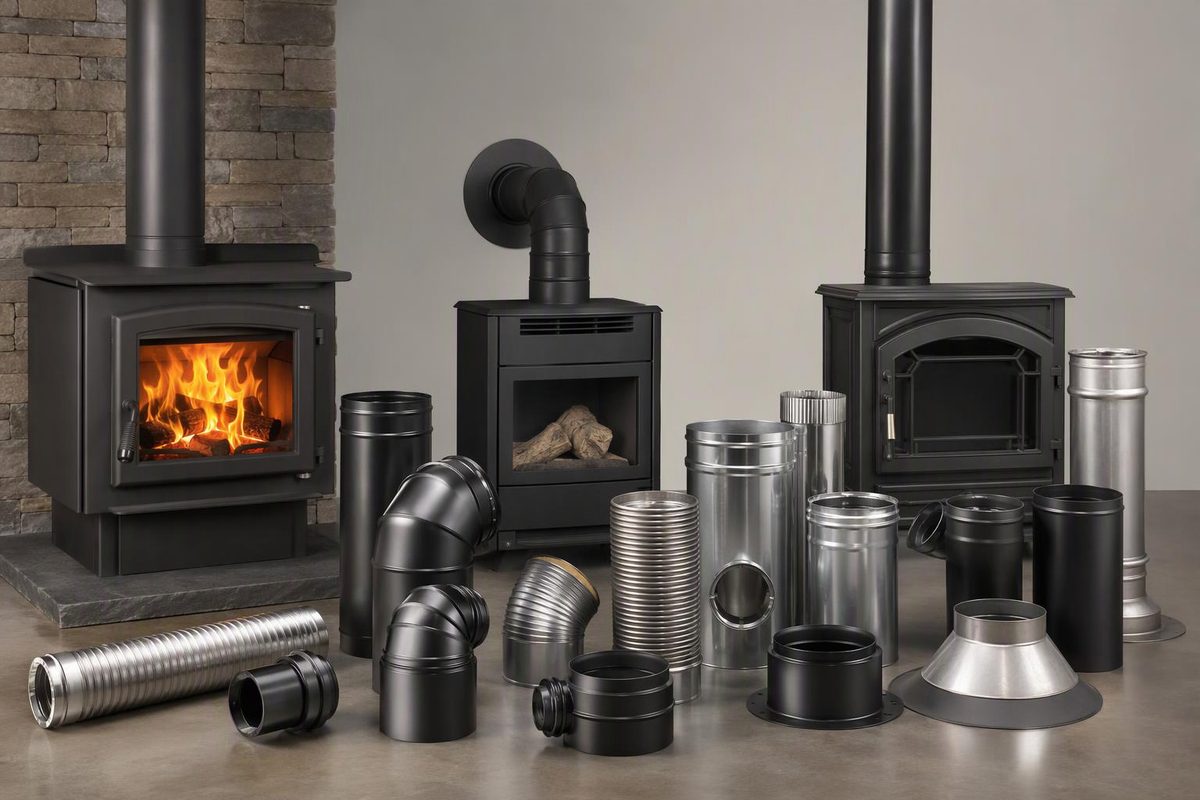
“Fireplace stove pipes” is not one interchangeable product category. A wood-stove connector, factory-built chimney, chimney liner, pellet vent and gas vent serve different purposes. Start with the appliance’s fuel, model number and installation manual—not the pipe’s color or whether its ends appear to fit.
For a freestanding wood stove, the key distinction is simple: stovepipe connects the stove to the chimney; it does not replace the chimney. Portland, Oregon’s building authority explicitly distinguishes connectors from listed factory-built chimneys and lined masonry chimneys. Its guidance does not allow a connector, gas vent or single-wall pipe to serve as the wood stove’s chimney. Portland Permitting & Development
1. Identify which system you have
| Appliance or installation | What to look for in its manual |
|---|---|
| Freestanding wood stove | Single-wall or listed double-wall connector, connected to an approved chimney |
| Wood-burning fireplace insert | Required chimney liner, connection method and compatible fireplace construction |
| Factory-built wood fireplace | The specific chimney series and components approved for that fireplace |
| Pellet stove or insert | Listed pellet vent or an approved chimney-lining arrangement |
| Gas fireplace or stove | Its designated direct-vent, B-vent or other model-specific venting system |
These distinctions matter when replacing existing parts:
- Wood inserts: Regency describes its wood-insert installation as connecting the appliance to a stainless-steel chimney liner. Do not assume an open fireplace’s existing flue is ready for an insert without checking the insert instructions and chimney condition. See our guide to installing a wood-burning fireplace insert. Regency
- Factory-built fireplaces: The Majestic SA36C/SA42C manual, for example, specifies SL300 Series chimney and prohibits unapproved components. “Class A” or “double-wall” on a replacement listing is not enough to establish compatibility. Majestic installation manual
- Pellet appliances: PelletVent Pro is listed for pellet and certain other fuels. Its instructions prohibit aluminum-lined Type B gas vent on pellet appliances and single-wall pipe on freestanding pellet stoves. For sizing and routing, use our separate pellet-stove pipe guide. PelletVent Pro instructions
- Gas appliances: DirectVent Pro uses an outer passage for combustion air and an inner pipe for exhaust; appliance approval is required. Type B gas vent is for appliances specifically listed for it, not wood burning. These are not substitutes for each other merely because both have two walls. DirectVent Pro, Type B specifications
Stop before buying if the appliance model or existing pipe system cannot be identified. Photograph accessible labels and ask the appliance or vent manufacturer to confirm the required parts.
2. For a wood stove, locate where the connector ends
In a typical through-the-ceiling installation, the exposed connector runs from the stove to the chimney support assembly. The factory-built chimney continues above it, with the required firestops, insulation protection, flashing and cap. A through-the-wall arrangement needs the system’s approved transition and wall-pass-through components. DuraPlus instructions
Double-wall connector is still connector pipe. DuraVent’s DVL instructions expressly prohibit enclosing it or passing it through walls, ceilings, attics or closets. Its reduced clearance does not make it chimney pipe. DVL instructions
For a masonry-chimney connection, have the existing flue and proposed connection assessed before treating a wall opening as usable. Portland’s guidance recommends inspection before a wood-stove connection and requires a lined chimney. Portland Permitting & Development
3. Check clearances and diameter separately
These are examples from U.S. guidance and manufacturer documents, not universal installation dimensions:
| Pipe example | Clearance to combustible materials |
|---|---|
| Unlisted single-wall wood-stove connector | 18 inches to unprotected combustibles under Portland’s guidance |
| DuraVent DVL double-wall connector | 6 inches to walls; 8 inches to ceilings |
| DuraVent DuraPlus chimney | At least 2 inches, except at specified internal locations within certain listed components |
The figures come from Portland’s connector guidance, DVL instructions and DuraPlus instructions. Verify both the appliance and vent requirements; a closer-clearance pipe does not automatically reduce the stove’s own clearance.
Measure from the pipe’s exterior, not its centerline. Required air spaces must remain clear—DuraPlus specifically prohibits filling them with insulation or other materials. DuraPlus instructions A brick or metal covering does not automatically make the combustible wall behind it safe at a reduced distance. Portland wall-protection guidance
For diameter, use the appliance manual and the pipe’s nominal inside diameter. DVL’s catalog distinguishes inside and outside dimensions and warns that reducing diameter can impair draft. Do not add a reducer simply to reuse a smaller chimney; a reduction needs explicit approval under the applicable instructions. DVL specifications
4. Build a complete parts list—not just a pipe order
Before ordering, record:
- Appliance model and permitted vent systems.
- Existing pipe manufacturer, series and nominal diameter.
- Connector lengths, offsets and transition components.
- Wall or ceiling penetration details and required supports.
- Clearances, termination requirements and cleaning access.
- Local permit and inspection requirements.
Follow the system’s joining instructions rather than a universal screw-or-sealant rule. DVL specifies screws at pipe connections; PelletVent Pro uses twist-lock joints, does not require screws, and warns against penetrating its inner liner. DVL instructions, PelletVent Pro instructions
Do not install damaged parts or improvise mismatched connections. If a chimney fire has occurred, leave the system out of service until it has been inspected for damage. DVL instructions