
Best Wood Burning Stove: Super LE, Princess 32 or Escape 1800?
Compare Pacific Energy Super LE, Blaze King Princess 32 and Drolet Escape 1800 by heat output, controls, ownership tradeoffs and installation fit.
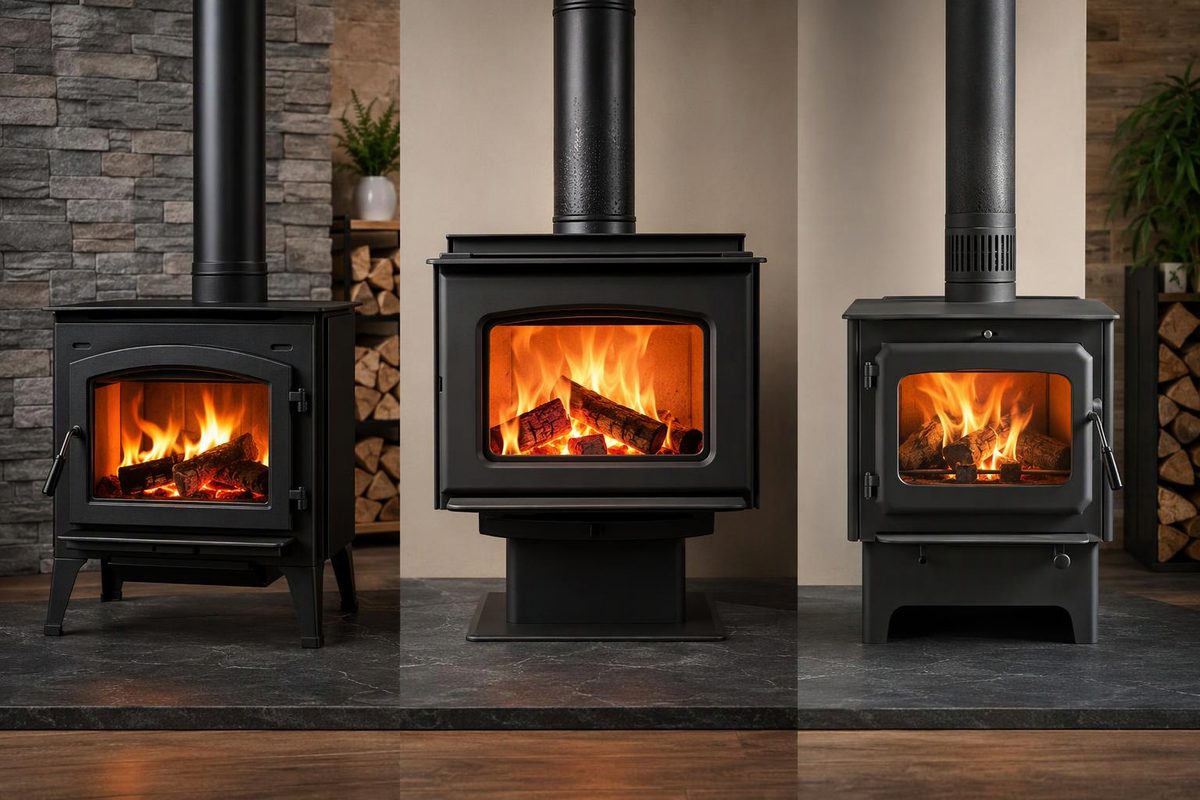
For a medium-to-large space, the Pacific Energy Super LE is our starting pick for straightforward operation. Choose the Blaze King Princess 32 instead when long, controlled burns matter most, or consider the Drolet Escape 1800 when you want a budget-minded non-catalytic stove with a clearly published purchase price.
None earns a recommendation until its clearances, hearth requirements and chimney arrangement fit your building. These are specification- and manual-based picks for freestanding cordwood stoves in the U.S., not a hands-on test ranking or recommendations for fireplace inserts.
The shortlist at a glance
| Model | Best fit on this shortlist | Published tested heat-output range | Overall HHV efficiency |
|---|---|---|---|
| Pacific Energy Super LE | Simple non-catalytic controls and north–south loading | 12,518–38,177 BTU/h | 71.3% |
| Blaze King Princess PE32 | Long burns with thermostatic heat control | 11,358–34,435 BTU/h | 82% |
| Drolet Escape 1800 | Cost-conscious buying and east–west log loading | 14,200–44,500 BTU/h | 72% |
HHV means higher heating value; compare it with other HHV ratings, not a higher-looking LHV or “optimum” figure. These are laboratory ranges, not guaranteed room outputs. The Princess and Super were certified using crib wood; the Escape uses cordwood, so the figures are reference points rather than an identical-condition contest. The EPA records identify those Super LE and Escape 1800 certification families.
Pacific Energy Super LE: the straightforward starting choice
The Super LE combines a 2.1-cubic-foot firebox, single-lever air control and non-catalytic combustion. Its stainless-steel baffle system avoids the catalytic combustor used in the Princess. North–south loading puts the log ends toward the door rather than stacking logs across the opening. Pacific Energy lists an 18-inch maximum log length and offers an optional blower and ash-disposal system. These features make it the most appealing starting point here for someone who wants uncomplicated controls rather than maximum advertised burn duration. Manufacturer specifications
Choose it over the Princess if avoiding catalyst monitoring and possible catalyst replacement is a priority. That does not mean maintenance-free: the Super manual still calls for checks of its baffle, firebrick, seals and chimney. Super LE manual
Installation stop point: its manual requires a minimum system height of 15 feet measured from the appliance base and specifies a six-inch outlet. Have the installer verify the proposed vent route before accepting this pick—particularly if an existing chimney is short or offset. Chimney requirements
Blaze King Princess 32: the pick for long, controlled burns
The Princess PE32 stands out for its thermostatic combustion-air control, which works without electricity. Blaze King advertises up to 32 hours of runtime on low, while the EPA record lists 82% HHV efficiency. That combination makes it our choice here for a homeowner who prioritizes long burn cycles and is willing to learn catalytic-stove operation. The runtime is a manufacturer claim at low output, not 32 hours of maximum heating; the same product page lists average heating time as 8–14 hours. Princess specifications
Choose it over the Super or Escape for its thermostat and long-low-burn emphasis—not simply because its efficiency number is higher.
The ownership tradeoff is the catalyst. You must use the bypass correctly, monitor the catalytic thermometer and inspect the combustor. The manual also notes that low settings may show little flame activity and can leave deposits on the glass. This is a heating-first choice, not necessarily the best choice for someone whose main goal is a lively flame view. Princess manual, operating and combustor sections
Installation stop point: Blaze King recommends at least 15 feet from the stove top to termination at elevations up to 1,000 feet for a route without elbows, with additional height guidance for elevation and offsets. That is a different measuring point from the Super’s requirement. Do not treat “a 15-foot chimney” as interchangeable between them. Recommended chimney heights
Drolet Escape 1800: the budget-minded pick
The non-catalytic Escape 1800 offers a 2.4-cubic-foot overall firebox, an included pedestal ash drawer on model DB03102, and optional blower equipment. Drolet’s U.S. site listed that model at $1,549 on November 7, 2026, excluding the rest of the installation. It also showed an estimated December 2026 return to stock; check authorized retailers if timing matters. This is a useful purchase-price reference, not proof that it will be the cheapest installed option. Drolet product page
Choose it over the Super if its quoted installed price suits your budget and you prefer loading logs across the firebox. The manual recommends 16-inch east–west logs and allows a 20-inch maximum. Its 2.4-cubic-foot overall volume is not all usable loading space: the manual identifies a 1.95-cubic-foot EPA loading volume. Drolet advertises a maximum eight-hour burn, but manufacturer burn-time claims are not a standardized comparison with the Princess’s low-output runtime. Escape manual
Do not confuse this stove with Escape 1800 H. The EPA database lists that name under a separate catalytic certification family; the non-catalytic Escape 1800 belongs to the 2.3 Series. Match the exact model, label and manual rather than buying by the family name alone. EPA certification families
What to ask for before placing the order
Confirm local restrictions, permits and inspection requirements with your building or fire authority. Ask the installer to price the exact stove and complete installation: hearth, required shields, connector, chimney or liner, outside-air provisions where required, permits and inspection. Request a drawing showing combustible clearances and cleaning access. The Super manual, for example, distinguishes room connector pipe from the chimney and prohibits passing the connector through a combustible ceiling.
Also ask whether the stove’s heat range suits the room’s heat loss and the home’s layout—not just the advertised square footage. If these medium-to-large candidates would overwhelm your space, use our small wood-stove selection guide rather than forcing a shortlist winner into the wrong room.
Finally, confirm a dry-firewood supply. The Princess manual specifies wood at 20% moisture or lower, checked on freshly split surfaces. A premium appliance is not a substitute for suitable fuel or a sound venting system. Fuel and moisture-meter instructions