
A Failed Furnace Does Not Make Condensing Mandatory Before 2028
The 2028 furnace phase-out is back in court. Learn when an 80% replacement remains viable and how to compare it with a 95% condensing quote.
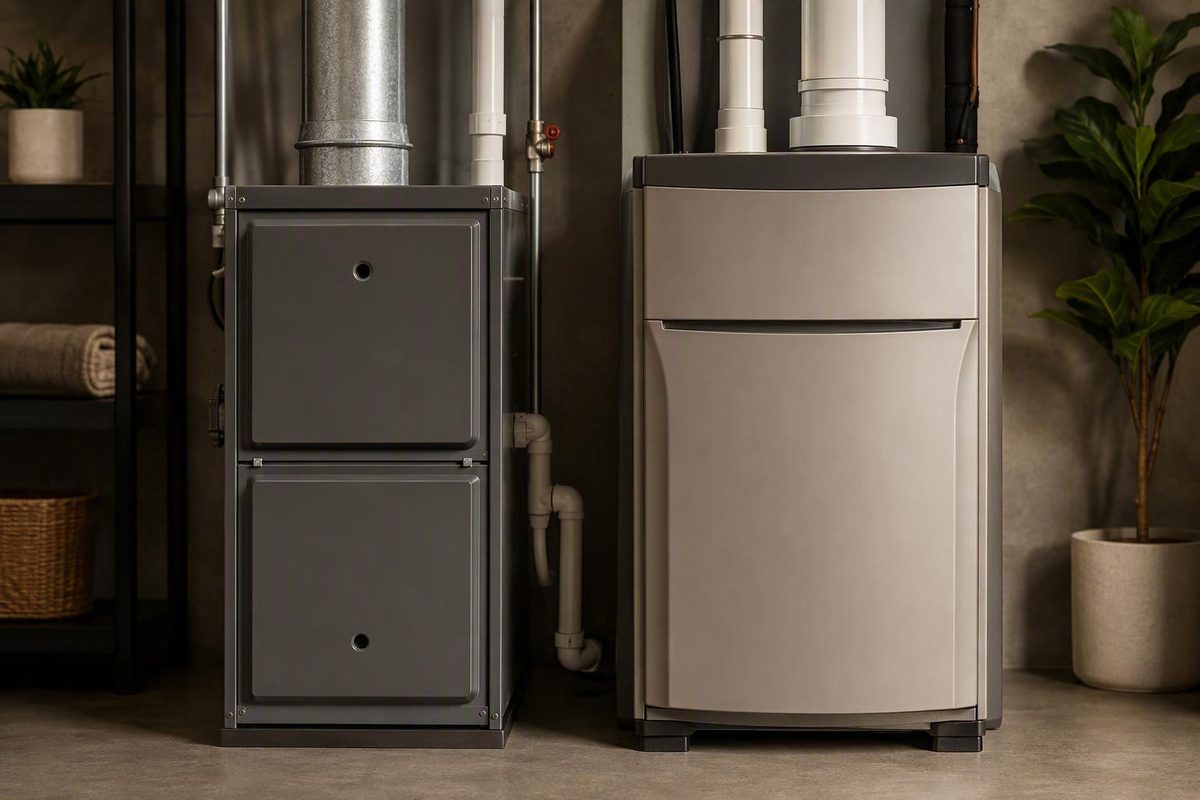
No. Even if your furnace fails this fall, the disputed 2028 rule does not currently make a 95%-AFUE condensing replacement the only honest choice. The Supreme Court vacated the ruling that had upheld the standard on June 9, 2026, sending it back to the D.C. Circuit after the Solicitor General opposed the rule. The latest supplied reporting therefore leaves the mandate in legal limbo rather than locked in (Utility Dive).
A code-legal 80%-AFUE non-condensing furnace may still be a reasonable replacement today, especially where it can use an existing vent or chimney and a condensing model would require new piping and condensate work. That is not a claim that 80% is always cheaper or better. The supplied evidence contains no installed-price figures, local gas prices, or universal payback period. Compare actual quotes and fuel use rather than paying a retrofit premium solely to “beat the ban.”
No supplied source says a safe, functioning non-condensing furnace must be removed by 2028. The original policy regulated specified classes of newly manufactured furnaces; it was not a federal deadline for homeowners to stop operating existing equipment.
The Case For Buying Condensing Now
The received wisdom has a sound factual foundation. DOE finalized a residential furnace standard in 2023 that would require covered furnaces manufactured after the December 2028 cutoff to achieve at least 95% AFUE. Conventional non-condensing, non-weatherized gas furnaces generally top out around 80%, so the standard would effectively make condensing technology necessary for newly manufactured models in the covered classes (Appliance Standards Awareness Project).
DOE projected energy benefits from the higher standard. A 95% furnace also uses less fuel than an 80% furnace to deliver the same amount of heat, assuming comparable sizing, installation and operating conditions. For a homeowner who expects to stay for many years, has high heating demand and can install PVC venting and condensate drainage inexpensively, condensing can be the better economic choice.
The D.C. Circuit had also upheld the rule in a divided November 4, 2025 decision. Before the Supreme Court acted, installers could reasonably describe the December 2028 manufacturing standard as an adopted rule rather than a proposal.
Where the sales pitch goes too far is the leap from “DOE adopted a 95% manufacturing standard” to “you must buy condensing now.” That skips the remand, the distinction between manufacture and installation, the rule’s limited product scope and the site-specific cost of changing venting systems.
Enter your gas use and both complete quotes; the calculator shows which replacement wins over your expected time in the home.
Use complete installed quotes. The tool estimates fuel cost for equal delivered heat and identifies the lower total over your expected ownership period.
- Use quotes for equipment of suitable capacity.
- Include chimney changes affecting another appliance.
- Do not omit permits, drainage or wall and roof work.
| Replacement | Installed Cost | Fuel Cost Over 10 Years | Total |
|---|---|---|---|
| 80% non-condensing May retain an approved traditional vent arrangement. | — | — | — |
| 95%+ condensing May need PVC venting and condensate disposal. | — | — | — |
The model holds annual heat demand and gas price constant. It excludes financing, maintenance, repairs, electricity, rebates, resale value and future rate changes because the supplied evidence gives no figures for them.
Source note: AFUE comparison uses the article’s documented 80% non-condensing and 95% condensing thresholds. All prices, consumption and retrofit costs must come from the reader; no national cost estimate is supplied.
The 2028 Date Is Not A Homeowner Replacement Deadline
DOE’s final rule was published on December 18, 2023, with a legal effective date of February 16, 2024. Neither date ordered homeowners to replace installed furnaces. The later compliance date concerned covered products manufactured after the cutoff, not ownership of equipment already in a house (Federal Register).
The supplied summaries differ by one day when describing the manufacturing cutoff: some say after December 17, 2028, while trade reporting uses December 18, 2028. Anyone making an inventory or compliance decision should check the current controlling text rather than rely on shorthand about a “2028 ban.”
The original rule covered two identified classes:
- Non-weatherized residential gas furnaces
- Gas furnaces used in mobile homes
DOE’s announcement does not apply this particular 95% requirement to every weatherized, oil, electric or commercial furnace (DOE). Product classification can be technical, so a contractor or manufacturer should identify the certified class of a proposed model in writing.
Manufacture, sale, installation and continued operation are separate events:
| Event | What The Supplied Evidence Establishes |
|---|---|
| New manufacture | The original rule set a 95% minimum for covered units after the December 2028 cutoff. |
| Existing inventory | ACCA said the rule had no sell-through limit, but later official guidance has not been verified here. |
| Installation | ACCA identified no separate federal installation deadline; state and local rules still apply. |
| Continued use | No supplied source identifies a federal 2028 operating ban for installed non-condensing furnaces. |
The Air Conditioning Contractors of America’s inventory interpretation is useful but not an unconditional legal guarantee. ACCA is a contractor trade association that opposed the rule, and its January 2026 explanation predates the Supreme Court remand (ACCA).
Before buying an 80% unit, have the seller document its model, AFUE, certified product class, manufacture date and legal basis for sale and installation. A valid manufacture date does not override local codes, permit requirements or manufacturer instructions.
The Supreme Court Put The Rule Back In Dispute
The legal sequence matters:
- DOE finalized the residential furnace standard in 2023.
- The D.C. Circuit upheld it on November 4, 2025.
- Challengers petitioned the Supreme Court on January 21, 2026.
- On June 9, 2026, the Supreme Court vacated that judgment and ordered further consideration in light of the Solicitor General’s position.
The dispute centers on whether venting method is a protected appliance “performance characteristic” that DOE must preserve when setting a standard. Condensing and non-condensing furnaces dispose of combustion products differently, so this is not merely an argument over an AFUE number.
The Solicitor General characterized the challenged rules as factually and legally flawed. The federal government also told the Court that DOE planned replacement rulemaking, and the appeals court could hold the litigation while that process proceeds. Reporting on the remand describes the government as siding with the gas-industry challengers against the prior administration’s rule (Yahoo/Facilities Dive).
That does not prove the standard will disappear. Efficiency advocates may prevail, DOE may issue another rule, or a later legal action may preserve or alter the compliance schedule. The supplied record does not establish what happened after June 9, 2026, including whether the original date has been stayed, delayed, preserved or superseded.
The supportable verdict is narrower: the 2028 phase-out is not settled enough to justify portraying a condensing furnace as mandatory for a replacement purchased today. Verify current DOE notices and court records before signing a contract based on future availability.
Venting Cost Can Decide The Replacement
An 80% non-condensing furnace keeps its exhaust hot enough for an approved metal vent or chimney arrangement. A condensing furnace extracts additional heat through a secondary heat exchanger, cooling the exhaust enough that water vapor becomes liquid condensate.
That design raises AFUE, but it changes the installation. A conversion may require approved intake and exhaust piping through a wall or roof, a condensate drain or pump, electrical work and alterations around the old chimney. Trane’s replacement overview identifies new piping, condensate drainage and installation complexity as possible conversion costs (Trane).
The supplied evidence gives no universal retrofit price. It also provides no average gas rate or typical annual furnace consumption. Those omissions are why the calculator uses your complete quotes, local rate and annual gas use rather than claiming a national payback.
For comparable bids, each contractor should put these items in writing:
- Exact model, certified product class, capacity and AFUE.
- The sizing method rather than an automatic match to the old furnace.
- Intake and exhaust route, materials and wall or roof work.
- Condensate destination, piping and any required pump.
- Treatment of the existing chimney and appliances remaining on it.
- Duct, electrical, control, permit and inspection work.
- Total installed price, exclusions and responsibility for finish repairs.
If another appliance will remain on a shared chimney, the contractor must evaluate the resulting venting arrangement. Whether modification is required depends on the appliances, chimney and applicable instructions; there is no single answer for every house.
Fuel Savings Must Recover The Added Installed Cost
AFUE is Annual Fuel Utilization Efficiency. In simplified terms, an 80% furnace turns 80% of its fuel energy into useful seasonal heat, while a 95% furnace turns 95% into useful heat.
For the same delivered heat, a 95% furnace would use about 84.2% as much fuel as an 80% furnace. Put another way, the modeled fuel reduction is about 15.8% relative to the 80% unit. Actual bills also reflect weather, thermostat settings, air leakage, duct losses, sizing, maintenance, installation quality and occupant behavior.
The useful comparison is not the equipment sticker price. It is the complete installed-cost difference divided by annual fuel savings, with the result checked against how long you expect to remain in the home. If the condensing installation costs more than it can recover during that period, its higher AFUE does not produce a personal financial payback within your ownership window.
A low-cost PVC route, accessible drain, high heating demand and long ownership period favor condensing. An existing chimney arrangement, difficult sidewall route, costly drainage work, modest gas use or short ownership period can favor a currently lawful 80% replacement. Safety, code compliance and proper installation remain non-negotiable in either case.
A Working 80% Furnace Does Not Become Illegal In 2028
No supplied source describes an installed 80% furnace as becoming illegal merely because the calendar reaches 2028. The reviewed sources also identify no federal 2028 prohibition on repairing one. Suitable parts, safe mechanical condition and applicable local requirements can still determine whether repair is possible.
That does not mean an unsafe or badly deteriorated furnace should remain in service. Combustion, heat-exchanger, gas-supply and venting concerns require an on-site assessment by a qualified professional. Permits, inspections, manufacturer instructions and local codes continue to control the work.
Age alone is not a diagnosis. Contractor guidance commonly uses 15 to 20 years as a planning range, but it is not a guaranteed service life or mandatory replacement point (Mowery). Repeated failures, documented deterioration, parts availability and test results matter more than a sales slogan.
If a furnace has failed, ask the contractor to separate four findings in the proposal: why repair is unavailable or unwise, whether an 80% replacement is currently lawful, what conversion work the 95% option needs, and how the two complete installed prices compare. “The government is banning 80% furnaces” does not answer any of those questions.
Verify The Transaction Before Signing
For an immediate replacement, obtain the current rule status and local requirements in writing. Confirm whether the proposed unit is in a covered federal product class, whether it can lawfully be sold and installed, and which permits and inspections apply.
Then compare complete projects. A condensing furnace can be the better purchase when its fuel savings and installation fit justify the price. A code-legal 80% furnace can be the better bridge when it avoids substantial retrofit work and the homeowner will not recover that premium.
The June 9, 2026 remand removes the basis for treating the original 2028 phase-out as inevitable. It does not choose the furnace for you. The condition of the failed unit, the house’s venting, actual quotes, fuel use, expected ownership and current law do that.