
Recognize a Blocked Vent and Know When to Stop
See what blocked combustion, HVAC and dryer vents look like, which operating clues matter, and when to stop checking and call for urgent help.
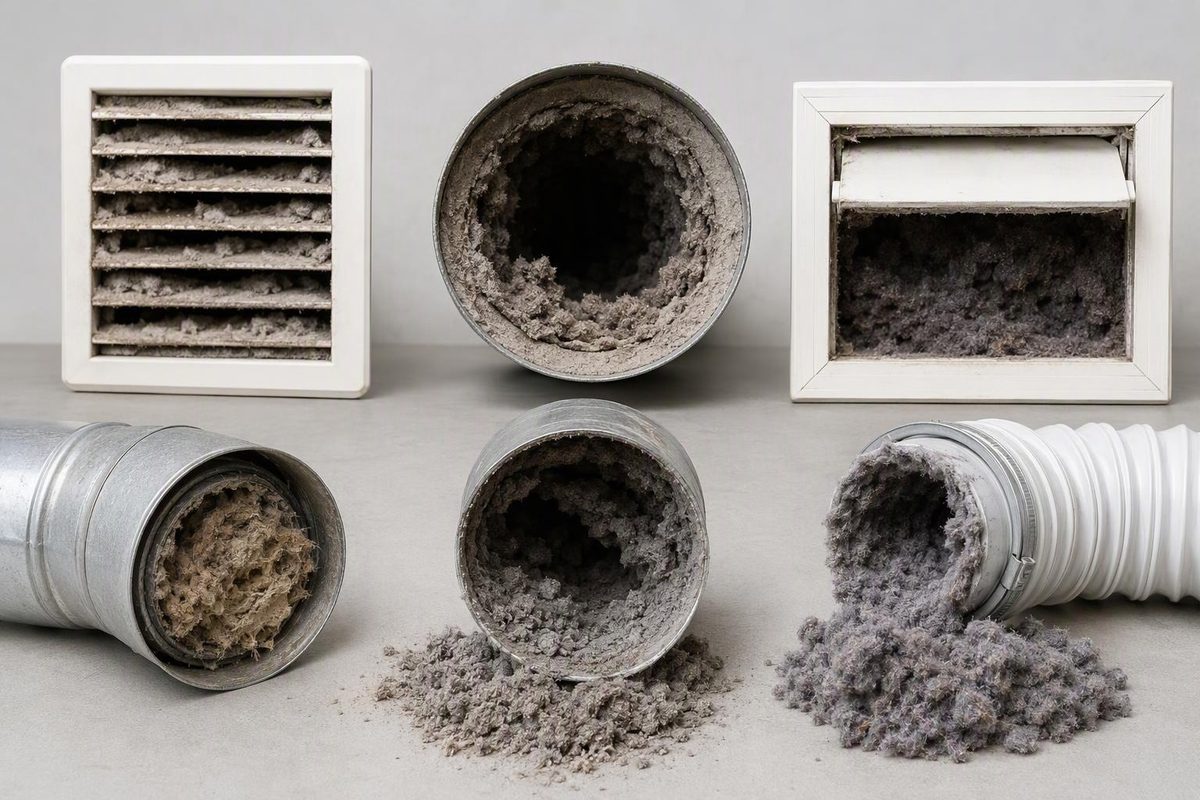
A blocked vent may look like packed lint, leaves, a nest, snow, ice, masonry debris or a crushed duct. It may also look completely clear: an obstruction farther inside a pipe, chimney or duct can leave nothing visible at the opening. The appliance’s behavior often provides the stronger warning.
First identify what the opening serves. Combustion vents, HVAC registers and dryer exhausts have different warning signs. A blocked combustion vent can create an immediate carbon-monoxide hazard, while a covered HVAC register usually causes an airflow problem.
Choose the vent and the strongest clue you have; the result shows the appropriate next step.
Blocked-Vent Action Check
The displayed result is the default for a fuel-burning vent with smoke, exhaust, soot or staining.
Stop Using the Appliance
Smoke, exhaust, soot or dark staining can indicate combustion spillage. Leave the appliance off and arrange qualified service. If a CO alarm sounds or anyone has possible CO symptoms, go outside and call emergency services.
Source basis: Natural Resources Canada, CDC, CPSC, Carrier, ENERGY STAR and the Building America Solution Center.
What a Visible Blockage Looks Like
| Vent Type | What You Might See | Other Clues |
|---|---|---|
| Furnace, boiler, water-heater, stove or fireplace vent | Snow, ice, leaves, animal nesting, masonry fragments, a displaced cap, or a crushed or disconnected pipe | Indoor smoke or exhaust, soot, repeated shutdowns, or a CO alarm |
| HVAC supply register | Furniture, a rug or drapery over the grille; a closed damper; heavy dust on its face | Little air leaving the register or an uneven room temperature |
| HVAC return grille | Furniture, boxes or drapery blocking the return; a heavily loaded filter where the filter sits behind the grille | Weak suction, whistling, uneven temperatures, or unusually long cycles |
| Dryer exhaust | Lint around the outdoor hood, a flap that stays shut while the dryer runs, or a kinked or crushed connector | Damp clothes, longer drying, or little exhaust at the termination |
Visible debris confirms an obstruction only at the point you can see. A clear termination does not prove that the full vent path is open. Likewise, weak airflow, staining or an odor establishes that something is wrong but does not identify the cause by itself.
Do not climb onto a roof or insert an object into a combustion vent to look for a blockage. Do not dismantle an appliance or cut into concealed ductwork as a diagnostic step.
Combustion-Vent Symptoms Require the Fastest Response
A fuel-burning furnace, boiler, water heater, stove or fireplace uses a vent to carry combustion products outdoors. Possible obstructions include bird nests, dead animals, broken masonry, collapsed liners and ice.
Natural Resources Canada notes that smoke entering a room or a dark stain above a fireplace can indicate combustion spillage. Neither symptom proves that the vent is blocked: poor vent sizing, wind and house depressurization can cause similar problems (Natural Resources Canada).
Stop using the appliance and arrange qualified service if you find:
- smoke or exhaust spilling into the room;
- new soot or dark staining around a draft hood, fireplace opening or vent joint;
- a loose, separated, perforated or visibly damaged vent connector;
- repeated appliance shutdowns accompanied by venting symptoms; or
- debris that appears to have fallen down a chimney.
Soot can indicate spillage or poor combustion, not merely a dirty surface. See why fireplace soot is not always a cleaning job.
Carbon monoxide has no visible appearance or smell. Headache, dizziness, weakness, nausea, chest pain and confusion are possible exposure symptoms (CDC).
If a CO alarm sounds or occupants have possible CO symptoms, go outside to fresh air, call emergency services and do not re-enter until responders permit it. Do not remain inside while trying to locate an obstruction (CPSC). A CO detector and smoke detector sense different hazards.
Safe confirmation of a combustion-vent problem may require draft testing, combustion analysis or an internal chimney inspection. The visible condition of the outlet alone cannot provide that confirmation.
HVAC Supply and Return Blockages Look Different
A supply register blows conditioned air into a room. A return grille draws room air back toward the equipment and is often larger. Carrier distinguishes them by outward airflow at a supply and slight suction at a return, and advises keeping returns unobstructed (Carrier).
Check an HVAC opening while the heating or cooling blower is running:
- Identify the opening. Determine whether air should blow out or be drawn in before treating weak movement as a problem.
- Clear room-side obstructions. Move furniture, rugs and drapes away. Open an adjustable supply register unless the equipment manual or system design says otherwise. Never cover a return grille.
- Inspect the filter. Replace a heavily loaded filter only with a size and type permitted by the equipment manufacturer. A restricted filter can reduce airflow throughout the system even when every grille is open.
- Compare several registers. One weak supply may indicate a closed damper, crushed branch duct, disconnection or internal obstruction. Weak airflow throughout the house points toward a broader filter, blower or duct problem.
- Stop at accessible checks. Persistent whistling, short cycling, icing, a burning odor or poor airflow calls for HVAC service rather than exploratory duct cutting.
Heavy dust on a register face can accompany poor airflow, but it does not prove the duct is plugged. ENERGY STAR recommends inspecting the filter and obtaining professional attention for blower airflow problems; a blocked room grille is not the only possible cause (ENERGY STAR).
A Restricted Dryer Vent Often Shows Up During Operation
Run the dryer and observe the outdoor termination from a safe location. Its flap or louvers should open, and exhaust air should escape. Packed lint, a motionless flap or very weak flow suggests a restriction. The actual blockage may still be inside the duct rather than at the outdoor hood.
Longer-than-normal drying and clothes that remain damp after a normal cycle are recognized blockage clues. Lint accumulation can reduce airflow, produce excessive heat and contribute to a fire (CPSC).
Look behind the dryer for a connector that is crushed or sharply kinked. Do not run the dryer while its exhaust duct is disconnected.
The U.S. Department of Energy’s Building America guidance says the termination should be outdoors, its flap should open, and it should not have a lint-catching screen (Building America Solution Center). If the duct route is long, concealed or inaccessible, have it cleaned and inspected rather than assuming the visible hood is the entire problem.
Appearance Alone Cannot Confirm the Cause
A nest, lint plug, sheet of ice or crushed connector is direct visual evidence where it appears. Smoke spillage, soot, weak airflow, long drying or appliance shutdowns are operating symptoms with more than one possible cause.
Match the symptom to the appliance and its complete vent path, then follow the appliance manual, vent listing and local requirements. Clear only safe, accessible room-side obstructions yourself. Combustion spillage, damaged venting, concealed dryer restrictions and persistent HVAC airflow problems require the appropriate qualified service.