
Fake Fireplace Logs: Identify the Type Before Replacing Them
Learn what artificial fireplace logs are made of, how gas and electric versions work, and why replacement logs must match the appliance.
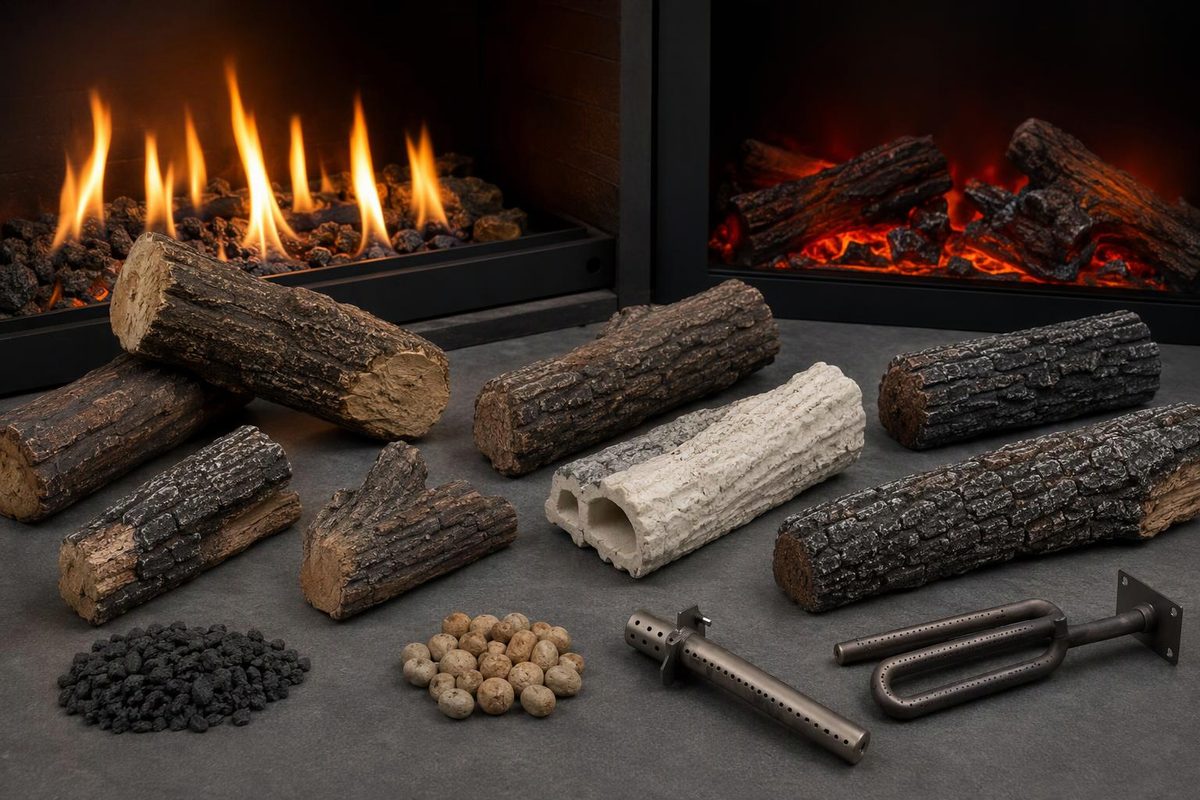
Fake fireplace logs are not one interchangeable product. They may be heat-resistant logs used with a gas burner, illuminated logs in an electric appliance, or decorations intended only for display. Manufactured firelogs are different again: they are fuel that actually burns.
Before buying replacement logs, identify the fireplace or burner model—not just the opening size or the wood style you want to imitate.
What are fake fireplace logs made of?
Gas logs: refractory ceramic and fiber-based materials
Gas logs imitate wood but are designed to remain in place during operation rather than be consumed as fuel. The gas burner supplies the flame; the logs form part of its intended flame arrangement.
Construction varies by product. Real Fyre’s G52-compatible logs, for example, use a fiber-enhanced refractory ceramic mixture. Its catalog also describes ceramic fiber-infused back logs in selected flame-enhancer kits and steel reinforcement in its gas logs. “Refractory” identifies a material intended for high-temperature service; it does not establish compatibility with every burner. See the manufacturer’s vented-log catalog.
Oak, birch and driftwood describe the appearance, not the fuel or an approval category. Choose among approved styles only after confirming the burner and log combination.
Electric logs: a lighting assembly, sometimes with a heater
Electric logs do not need a real flame to look lit. Napoleon’s Woodland 24, for example, has five hand-painted resin logs, LED lighting and flames projected onto a surface behind the set. Its heat comes from an electric heater, not burning logs, according to the manufacturer’s specification sheet.
The logs can also contain electrical components. Dimplex’s Revillusion RLG25 assembly instructions say its Realogs contain pulsing LEDs and warn that the logs are fragile. Treat these as appliance parts, not loose ornaments or material for a combustion fireplace. Its safety instructions prohibit burning wood or other materials on the set.
Manufactured firelogs: combustible fuel
A wrapped manufactured firelog is not a reusable gas or electric log. Duraflame says its firelogs contain recycled wood and agricultural fibers mixed with wax and other combustible materials. Its regular firelogs have use restrictions, including not burning them in wood stoves or inserts with doors that affect airflow. Follow both the package and fireplace instructions; approval for an open-hearth fireplace is not approval for every wood-burning appliance. See Duraflame’s use and safety guidance.
For products sold only as decorative logs, require explicit appliance approval before placing them in an operating fireplace. A realistic appearance or “heat-resistant” sales description is not enough.
Can you replace gas fireplace logs with a different set?
Only when the manufacturer approves that set for the exact appliance or burner. Physical fit alone does not establish safe operation.
Real Fyre’s Foothill Split Oak instructions illustrate why: they require a G19A burner, specified log positions and maintained spacing. Incorrect placement can cause flame impingement and improper combustion, producing soot or excessive combustion by-products. Those log-placement instructions also prohibit adding extra embers.
Use this replacement sequence:
- Record the make, model and serial number. For a separate gas log system, identify the burner as well as the log style.
- Find the parts list and placement diagram. Match the log part number, set size and approved burner—not merely the nominal log length.
- Confirm what the package includes. Replacement logs alone are not a complete burner system.
- Keep the specified layout. Do not add branches, embers, rocks or other media unless the instructions expressly allow them.
- Stop if identification or approval is missing. Ask the manufacturer or a qualified hearth technician to identify the system before ordering.
For selecting an entirely new burner-and-log system rather than replacing its artificial logs, use the separate gas log set selection guide.
Damaged or sooty logs need more than a cosmetic fix
Turn the appliance off and let it cool before handling logs. For electric sets, disconnect power before maintenance or cleaning, as the Revillusion manual directs.
Do not improvise a repair with paint, glue or fireplace cement; obtain the manufacturer’s replacement or repair direction. Napoleon’s Ascent Deep owner’s manual, for example, prohibits damaged, incomplete or substitute components.
For cleaning, use the instructions for the exact log material and appliance rather than a general scrubbing or washing method.
If a gas set develops new or increasing soot, leave it off for assessment rather than rearranging logs while it burns. Real Fyre’s G19A manual specifically directs immediate shutdown and professional service when soot appears outside the firebox. Replacing the visible logs without correcting the combustion problem is not a repair.