
Choose a Log-Burner Fan by Stove Temperature and Placement
Learn what a heat-powered log-burner fan does, how to check temperature compatibility, where to place it, and what to do if it stops spinning.
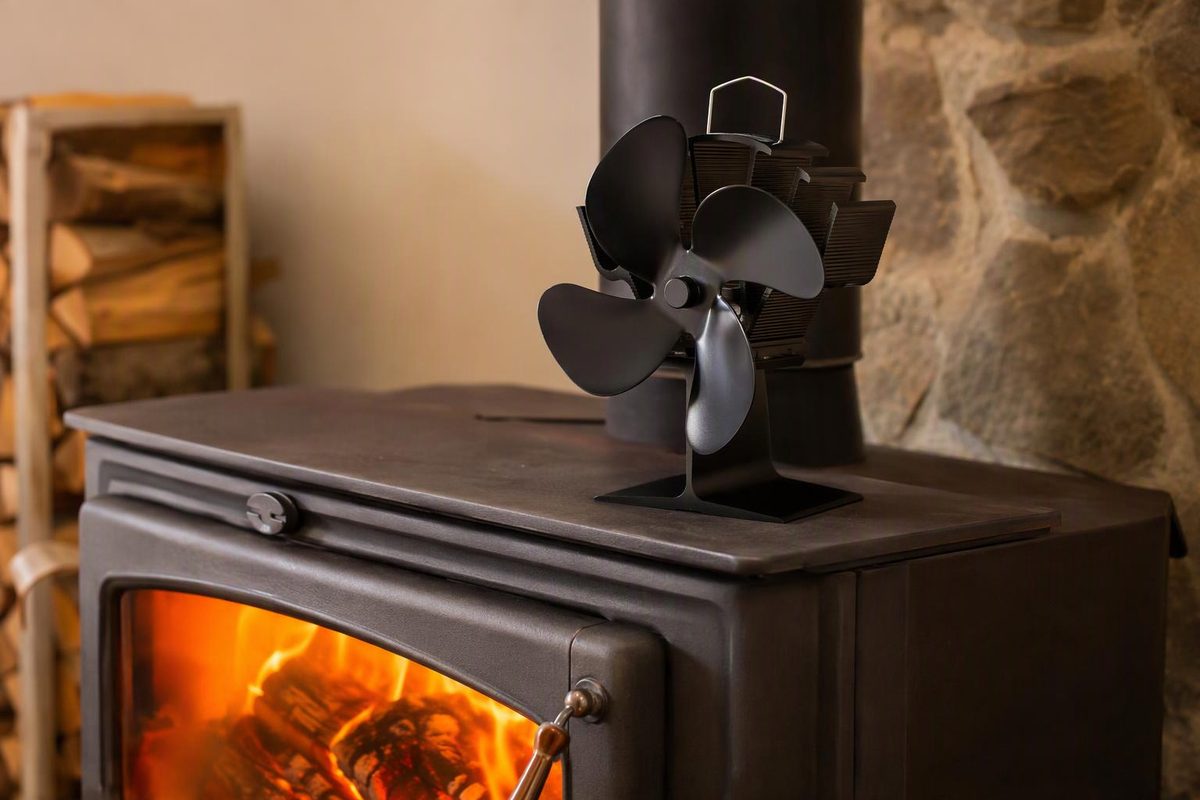
A heat-powered fan for a log burner can help move warm air into the room without a plug or batteries. It is a circulation accessory, not an extra heater. Before buying, check that your stove has a suitable exposed top, that its surface temperature matches the fan’s operating range, and that cooler room air can reach the fan’s cooling fins.
Which type of fan do you need?
Two different accessories are commonly called stove fans:
- A freestanding heat-powered fan rests on the stove top. A thermoelectric module generates electricity from the temperature difference between its hot base and cooler upper fins, powering a small motor. This is how Caframo’s Ecofan works; it needs no mains supply or batteries. Caframo’s technology explanation describes that arrangement.
- A fitted electric blower attaches to a stove designed to accept it. For example, the Drolet Classic EPA manual specifies a rear-mounted blower kit that directs heat toward the front of the stove. The correct kit and fitting instructions depend on the appliance, not simply its dimensions. See the Drolet manual, section 2.6.
If you want a fitted blower rather than a stove-top accessory, start with the model number and the approved options in the stove manual. Our wood stove with blower guide covers that decision.
Check temperature and available space first
Measure the stove-top surface where the fan will sit—not the flue temperature. Use a thermometer suitable for that surface and follow the stove manufacturer’s measurement instructions. Compare readings during normal operation with the exact fan manual.
As examples, Caframo lists these operating ranges:
| Heat-powered fan | Listed stove-top operating range |
|---|---|
| Ecofan 810 UltrAir | 100–345°C / 212–650°F |
| Ecofan 812 AirMax | 85–345°C / 185–650°F |
These are model-specific figures, not a universal specification for log-burner fans. Caframo’s FAQ lists the ranges, while the 810/812 operating instructions explain that the quoted minimum temperatures correspond to 50 cubic feet per minute (CFM) airflow. They are not simply blade-start temperatures, and a turning blade does not establish how much air the fan is moving.
Also check:
- A smooth, flat seating area for the complete base.
- Enough height and blade clearance beneath any recess or shelf.
- Access to cooler air behind the fan.
- Space that does not obstruct stove controls, loading or maintenance.
An insert recessed into a fireplace needs particular care: it may lack suitable space or cooling airflow. Do not assume a small fan will work merely because it fits. Caframo says insert suitability depends on placement and cooler-air access. Check both appliance and fan instructions for the proposed arrangement.
Choose by temperature compatibility, usable airflow information and physical fit—not blade count alone. The stove’s own safe operating limits still apply; a fan’s maximum temperature is not permission to run the stove hotter.
Where to position it
For the Ecofan models discussed here, Caframo recommends a smooth, flat area near the side or back of the stove, with cooler room air able to pass through the upper fins. It advises against the centre, the front edge and directly in front of the stovepipe. Follow your own fan’s placement instructions if they differ. Manufacturer placement guidance.
Do not automatically choose the hottest spot. The fan needs a temperature difference, not just heat everywhere. Caframo warns that overheating can reduce performance and damage the thermoelectric module. The 810/812 instructions say to remove the fan if the surface temperature exceeds 345°C / 650°F. The base becomes very hot: never grasp it, and use the designated handle when repositioning. Operating and safety instructions.
What improvement should you expect?
Treat it as a possible improvement in room comfort and heat distribution, not a whole-house heating solution. Caframo reports fuel-use reductions in controlled tests comparing equivalent thermal comfort at a specified distance from the stove. That is not a guaranteed saving for your room, stove or firing routine. Manufacturer’s test explanation.
A practical check is to compare temperatures at your usual seating position under similar firing conditions, rather than judging performance by blade speed. Do not reduce combustion air until the fire smoulders to chase a claimed saving: EPA’s archived wood-burning guidance warns that, for most appliances, smouldering fires are neither safe nor efficient.
If the fan stops spinning
Check the surface temperature and cooling-air access first. A slowing fan as the stove cools may simply lack enough temperature difference. Do not overfire the stove to make it turn.
Once everything is cold, check for dust, blade obstruction or visible damage. If correct temperature and placement do not restore operation, consult the manufacturer. Caframo identifies slow spinning or needing a push to start as possible signs of a worn motor and offers model-specific replacement kits. Troubleshooting guidance.
Smoke entering the room is a separate stove or venting problem—not something a circulation fan should be used to disperse. EPA advises that regularly seeing or smelling smoke can indicate a problem. If smoke spillage recurs, stop using the stove until the appliance and chimney have been assessed.