
Wood Burner or Fireplace? Start With the Appliance and Chimney
Compare an open fireplace, wood-burning insert and freestanding stove, then check fireplace compatibility, flue requirements and clearances.
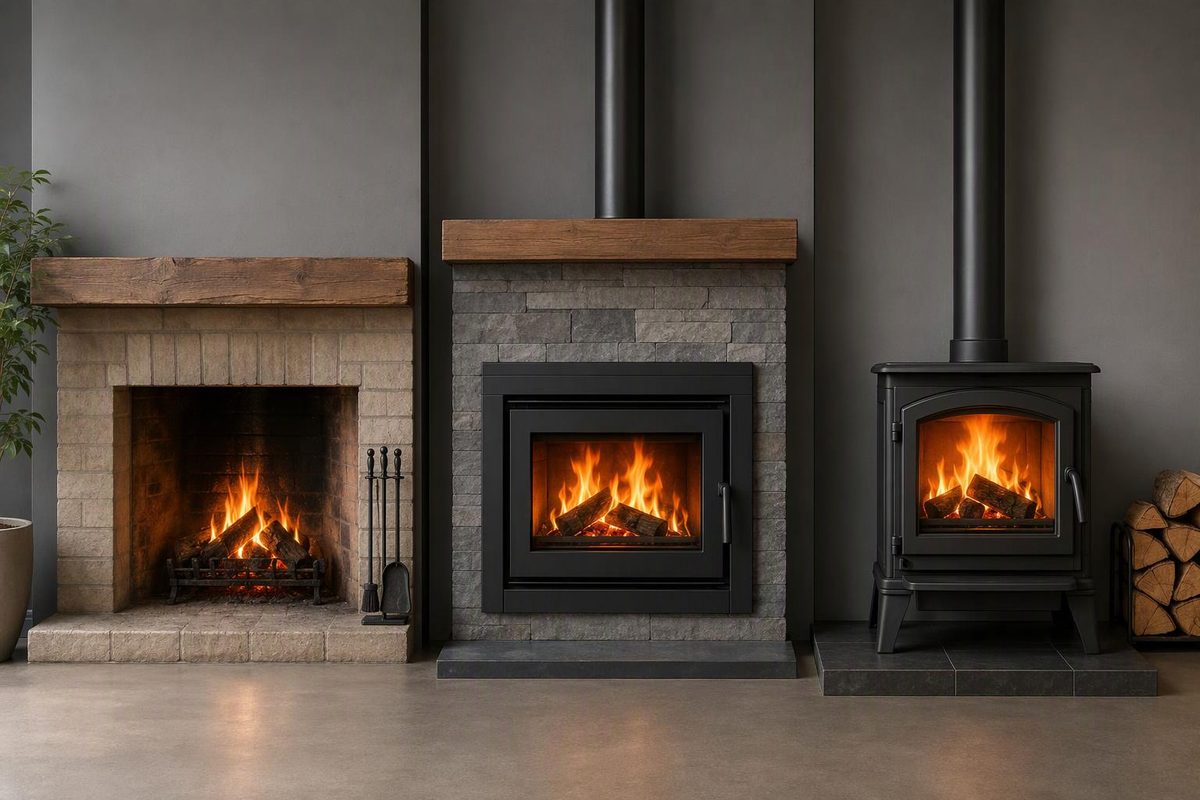
A wood burner and a fireplace are not interchangeable. A wood burner usually means an enclosed wood-burning stove; a fireplace may be an open masonry firebox or a factory-built appliance. A wood-burning insert is an enclosed heater designed to fit into an approved existing fireplace.
If you want more useful heat from an existing fireplace, compare a compatible insert with a freestanding stove installation—not just the appliances’ appearance. The first decision is whether the fireplace, chimney and surrounding construction can support the proposed setup.
Choose the arrangement before choosing a model
| Arrangement | What you are choosing | First check |
|---|---|---|
| Keep an open fireplace | An open fire rather than an enclosed room heater | Fireplace and chimney condition; realistic heating expectations |
| Install a wood-burning insert | An enclosed heater fitted into an existing fireplace | Whether that exact insert is approved for that fireplace type |
| Install a freestanding wood stove | A separate room heater with its own specified connection to a suitable chimney | Stove location, floor protection, clearances and chimney route |
An open wood-burning fireplace is generally an inefficient home-heating method: its draft can pull heated room air up the chimney and leave other rooms cooler. An enclosed, EPA-certified heater is the more relevant comparison when useful heating is the goal. EPA’s archived efficiency guidance explains this distinction.
That does not mean every glass-fronted wood fireplace is inefficient. Identify the appliance from its label and manual rather than treating every built-in firebox as an open fireplace.
Can a wood burner go in an existing fireplace?
Sometimes, but physical fit is only the first check.
Identify the existing fireplace
Establish whether it is a site-built masonry fireplace or a factory-built metal fireplace. For a factory-built unit, locate its manufacturer, model and installation instructions. Brick or stone facing alone is not enough to establish compatibility.
Portland’s building authority warns against installing an insert into a metal fireplace unless both the fireplace and insert are specially listed and labeled for that use. That is Portland guidance, not a substitute for your local requirements, but it illustrates the compatibility check to make before buying. Portland fireplace-insert requirements
Read the proposed heater’s restrictions
Do not assume that a freestanding stove can be pushed into the firebox, or that any insert can use a factory-built fireplace.
For example, the Regency F2450-2 stove manual says it is to be installed as a freestanding room heater and not installed in any fireplace. The Regency I2500-1 insert manual specifies masonry-fireplace installation and prohibits installation in a factory-built fireplace. These are model-specific restrictions, not rules for every wood heater. F2450-2 manual; I2500-1 manual
Stop here if the fireplace identity or installation approval is unresolved. Measuring the opening cannot establish that an appliance is safe to install.
Use our fireplace compatibility checklist to organize the opening, hearth and clearance measurements once the fireplace type is known.
Check the chimney as a separate system
An existing chimney is not automatically suitable for the new heater. Have its condition and proposed connection assessed before ordering the appliance. The I2500-1 manual requires inspection for cracks, loose mortar and other damage, with repairs completed before installation. It also prohibits removing masonry bricks or mortar to make the insert fit. I2500-1 installation requirements
Three checks matter:
- Correct vent system. Stovepipe is a chimney connector, not a complete chimney. A wood stove needs a suitable listed chimney or code-compliant lined masonry chimney; gas vent or an unlined masonry shaft is not a substitute. Portland chimney guidance
- Correct liner design. Match liner diameter, listing and installation requirements to the appliance and liner instructions. For example, the I2500-1 requires a continuous 5.5- or 6-inch liner from the insert to the chimney top. Those sizes belong to that model, not every insert. I2500-1 liner requirements
- No assumed shared flue. Do not plan to connect a stove and an operating fireplace to the same flue. Massachusetts fire-safety guidance prohibits a solid-fuel appliance from sharing a common flue with another combustion appliance; the cited Regency manuals also prohibit connections to a flue serving another appliance. Separate flues within one chimney structure are a different arrangement requiring assessment. Massachusetts chimney safety guidance
For the next planning stage, see installing a wood-burning fireplace insert safely.
Verify clearances, fuel and upkeep before comparing price
Ask the installer to document:
- Appliance and connector clearances, including nearby walls, mantel, trim and any alcove restrictions.
- Hearth protection, including front and side extensions and whether thermal protection—not just ember protection—is required. The I2500-1 manual distinguishes these functions; a noncombustible surface alone does not establish compliance. I2500-1 hearth requirements
- Local permission, including permits, inspections and applicable wood-burning restrictions.
- The complete work scope: appliance, chimney or liner work, repairs, hearth alterations and any blower wiring.
For heating comparisons, use overall efficiency, not combustion efficiency alone: overall efficiency measures heat transferred to the space. Dry fuel matters too; EPA’s archived guidance recommends firewood moisture readings of 20% or less. EPA efficiency and fuel guidance
Plan for professional cleaning and inspection of the heating equipment and chimney each year, and maintain smoke and carbon-monoxide alarms. U.S. Fire Administration maintenance guidance; Massachusetts alarm guidance
The useful purchase decision is the approved appliance plus the complete installation. A low-priced stove that cannot use your fireplace or chimney is not a cheaper version of a compatible setup.