
Portable Electric Fireplace: Check Placement, Power and Heat
Choose a portable electric fireplace by safe placement, outlet capacity, realistic heat output and handling—not flame effects alone.
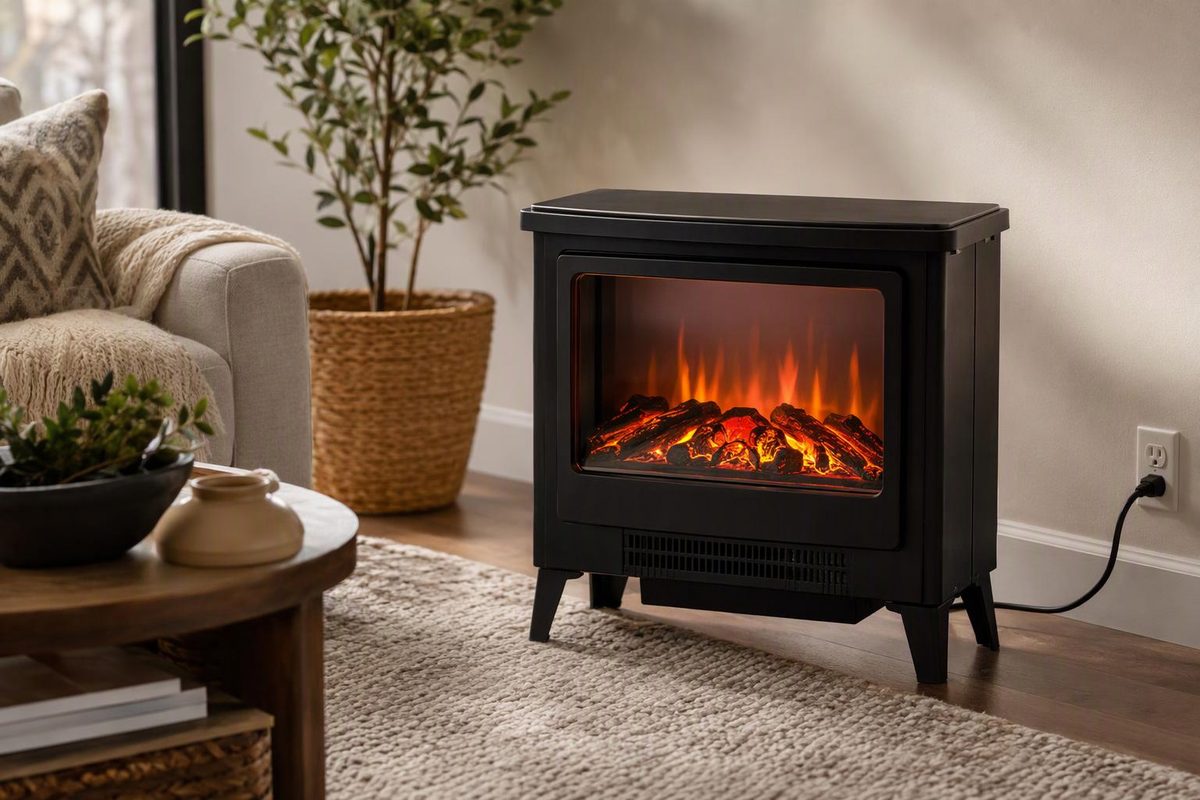
A portable electric fireplace is a movable electric heater with a decorative flame effect—not a small wood-burning stove. It needs no combustion vent or chimney, but it still needs safe clearances, unobstructed airflow and a suitable electrical supply. Never put wood or manufactured firelogs in it; the Twin-Star electric-stove manual explicitly prohibits that use.
Before comparing flame effects, check whether the appliance can operate safely in each room where you intend to use it. The electrical examples below concern 120-volt models used in North America; use the rating label and manual for your market and exact model.
1. Find a safe position before choosing a size
Measure the proposed location with the heater’s clearance space included—not just its cabinet footprint. For portable heaters, the U.S. Consumer Product Safety Commission recommends keeping combustible materials such as curtains, furniture and bedding at least three feet away. Follow the appliance’s additional placement and clearance instructions as well. CPSC portable-heater guidance
Check these points in the manual and at the proposed location:
- Support: Use a level, stable surface approved by the manufacturer, with all required legs or feet installed. A compact cabinet is not permission to place it on a shelf.
- Airflow: Locate the intake and heat outlet. Neither should be blocked by a rug, furniture, curtains or stored items.
- Cord route: The supplied cord must reach the outlet without crossing a walking route, being pinched or passing under a rug.
- Environment: Do not assume a portable model is suitable for bathrooms, laundry areas or outdoor use. The Twin-Star DFI-5018 manual excludes those uses and prohibits soft surfaces where openings can become blocked.
Stop here if the only available position blocks airflow or puts the heater beside bedding or drapes. A smaller cabinet does not eliminate the clearance requirement.
2. Check the outlet and circuit—not just the plug
A 1,500-watt heater on a 120-volt supply draws approximately 12.5 amps. That is a substantial load. For example, Twin-Star’s DFS-750 manual specifies 120 volts, 1,500 watts and a 15-amp circuit, preferably dedicated because other appliances on the same circuit can cause the breaker to trip. Those specifications are an example, not a rule for every fireplace. DFS-750 electrical requirements
Plug the heater directly into a suitable wall receptacle. Do not use an extension cord or power strip, even if an older manual offers an extension-cord allowance; direct wall connection is the safer approach recommended by CPSC.
Two outlets in different rooms may share one circuit. Moving the fireplace does not necessarily give it a different electrical supply. Check what else is on that circuit, particularly other heaters or high-wattage appliances.
Inspect the cord, plug and connection before use. Do not use damaged components or a loose connection. If you notice overheating, discoloration or repeated breaker trips, stop using the heater and have the appliance or electrical supply assessed by a qualified professional. Do not repeatedly reset the breaker to keep heating. ESFI inspection guidance and Riverside County Fire Department electrical-safety advice support checking for damage, loose connections and overheating before operation.
3. Compare watts before square-foot claims
A 1,500-watt heater supplies about 5,100 BTU per hour, calculated using approximately 3.412 BTU/h per watt. A larger fireplace cabinet does not increase that output unless its electrical heating rating is higher.
Treat advertised room coverage as a screening figure, not a promise. The heat needed to hold a room temperature depends on outdoor conditions, insulation, air leakage, windows, ceiling height and openings to adjacent rooms. Plan for supplemental comfort rather than assuming a portable fireplace can replace the home’s heating system; ESFI describes portable heaters as supplemental heat. It also cannot provide heat during an outage without another suitable electrical supply.
For running cost, use:
Cost = power in kilowatts × hours running × electricity price per kWh
For example, a 1,500-watt unit running continuously at full power for four hours uses 6 kWh. At an illustrative $0.20/kWh, that costs $1.20. Thermostat cycling changes actual consumption; flame-only consumption must be checked separately.
4. Make portability and controls useful
Before buying, check the appliance weight, carrying instructions and whether assembly is required. Look for a label showing that the appliance is listed by a recognized testing laboratory, as ESFI recommends.
Confirm that the controls offer what you need: heat off with flames on, an adjustable thermostat, and documented overheat protection. Prefer a model with tip-over shutoff, particularly where it could be knocked over; WVU Extension recommends thermostatic controls and automatic shutoff features.
Turn the unit off, unplug it and let it cool before moving it. Recheck placement and electrical supply in the next room. Keep children and pets away from hot surfaces, and turn the heater off before leaving it unattended or going to sleep. A timer or thermostat does not replace those precautions. Portable-heater operating guidance
If you intend to leave the appliance permanently in one location, compare the fit and power requirements of a corner electric fireplace.