
Choose wood-stove stovepipe by size, clearance and chimney connection
Choose stovepipe for a wood stove by diameter, single- or double-wall clearance, chimney transition and cleaning access—not just appearance.
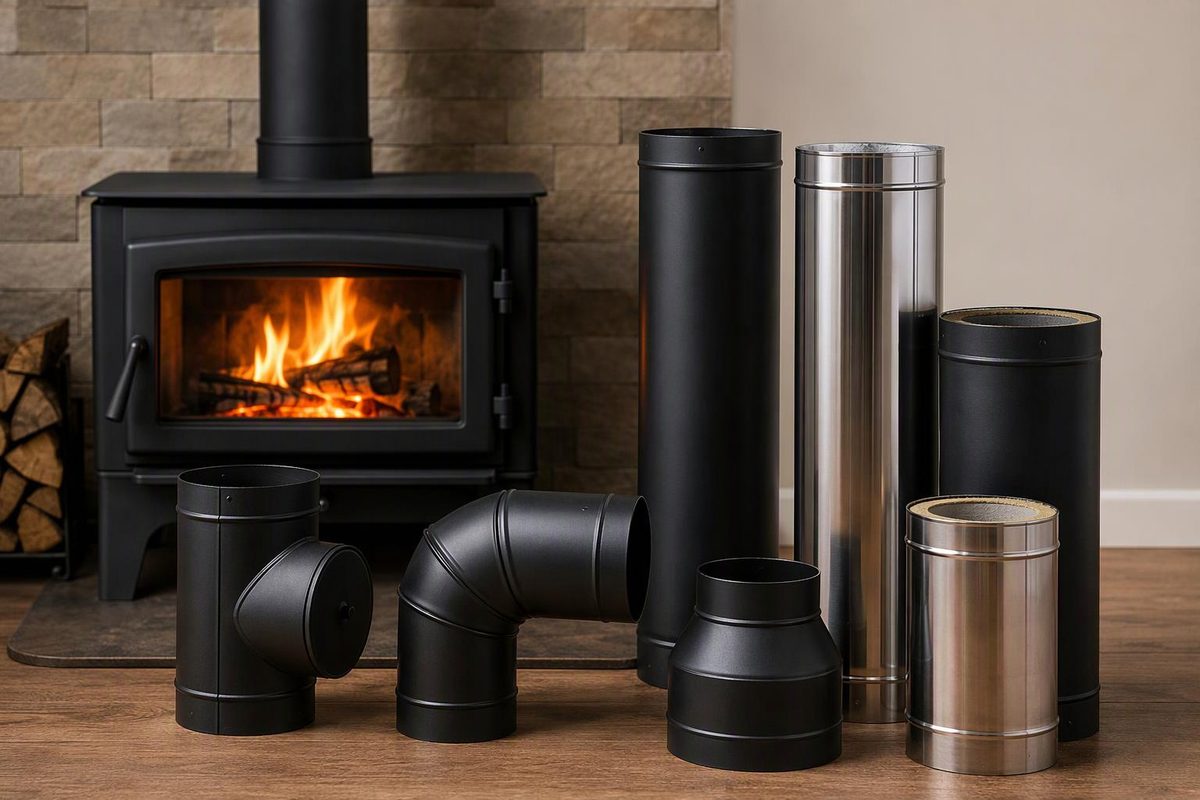
Stovepipe is the connector between a wood stove’s flue collar and its chimney. It is not a substitute for chimney pipe. Choose it by the stove’s required diameter, available clearance to combustibles and approved chimney connection—not simply by color or whether the pieces fit together.
Start with the exact stove manual and the instructions for the connector and chimney system. The specifications below are examples from North American manufacturer manuals; confirm permits, restrictions and inspection requirements with your local building or fire authority before work begins. DuraVent’s DVL instructions explicitly require that local check.
Identify where stovepipe must end
For a factory-built chimney, the exposed connector normally ends at the chimney’s ceiling-support connection or room-side wall connection. The listed chimney system handles the passage through the building and continues to the termination.
Double-wall stovepipe is still connector pipe. DuraVent prohibits enclosing DVL or passing it through walls, ceilings, attics or closets. Its installation diagrams show the transition to chimney at the ceiling or wall. A reduced wall clearance does not make it safe to run through framing. Source: DVL installation instructions.
For a masonry chimney, have the chimney inspected before connecting the stove. A connection through a combustible wall needs an approved pass-through arrangement, not merely a hole with a decorative trim ring. The 2021 Ashley AW3200E-series manual requires chimney inspection and describes special combustible-wall pass-through methods.
If the existing pipe’s identity is uncertain, pause here. Our Class A chimney pipe identification guide explains what to verify before treating metal pipe as a wood-stove chimney.
Choose single-wall or double-wall by clearance
Both types can serve as exposed connectors where the appliance and venting instructions permit them. Their clearance requirements differ substantially.
| Connector choice | Clearance example | Decision it helps resolve |
|---|---|---|
| Single-wall stovepipe | DuraVent’s DuraPlus instructions specify at least 18 inches to combustibles, unless an accepted clearance-reduction system or applicable appliance listing permits otherwise | Whether there is enough room for an exposed single-wall connector |
| DuraVent DVL double-wall stovepipe | 6 inches to walls; 8 inches to ceilings | Whether this particular close-clearance connector fits the planned route |
Sources: DuraPlus installation instructions and DVL installation instructions.
These are not universal clearances for every product. Measure from the connector’s outside surface, and check the relevant vertical, horizontal or corner configuration. The stove body has its own clearance requirements; choosing double-wall pipe does not automatically authorize moving the stove closer to a wall.
DVL also retains more heat in the flue gases, which helps maintain draft. That is useful, but it does not eliminate creosote or the need for cleaning. DuraVent’s DVL specifications describe its air-insulated construction and heat-retention purpose.
Match diameter and fittings before buying
Use the diameter required by the stove manual, measured as the connector’s nominal inside diameter—not the double-wall pipe’s outside diameter. DuraVent says connector and chimney diameters should match the appliance outlet and warns that reducing diameter can adversely affect draft. Do not choose a reducer merely because it connects to an existing smaller chimney. Source: DVL specifications.
Build the parts list around three connections:
- Stove collar: Check whether the connector fits directly or needs the specified stove adapter.
- Connector sections: Use compatible lengths, elbows and adjustable sections from the approved system.
- Chimney transition: Identify the chimney make, model and support or finishing connection before selecting an adapter.
DVL instructions prohibit mixing it with single-wall pipe or other products and prohibit cutting its sections. They specify adjustable or telescoping sections for length adjustment. Physical fit alone is not approval. Source: DVL installation instructions.
Check routing, joints and cleaning access
Keep the connector as short and straight as reasonably possible. For an example of appliance-specific assembly requirements, the 2021 Ashley AW3200E-series manual specifies:
- Crimped male ends facing toward the stove.
- Three equally spaced metal screws at each connector joint.
- Horizontal sections rising toward the chimney at least 1/4 inch per foot.
Those instructions apply to that appliance’s described connector arrangement; use your own stove and pipe instructions for fastening, overlap and routing limits. Do not guess double-wall orientation from its outer sleeve. Source: Ashley manual.
Plan access for inspection and removal of deposits before installing the pipe. DVL requires cleaning access and inspection at least monthly during the heating season, with accumulated soot or creosote removed. Source: DVL maintenance instructions.
Before the first fire, have a qualified installer check the components, joints, clearances and chimney condition. Proper draft must then be verified during commissioning, not assumed from appearance. Verify a working carbon-monoxide alarm as required locally. The Ashley commissioning checklist provides an example of the checks an installer should document.
If the connector is damaged, enters a concealed space without an identifiable approved transition or pass-through, or lacks verifiable clearance, stop and have a qualified installer assess it rather than attempting a test burn.