
White Gas Is Camp Fuel, Not a Home-Heating Substitute
Identify white gas, check stove compatibility, and understand why camp fuel belongs outside—not in a fireplace, home heater, or indoor emergency stove.
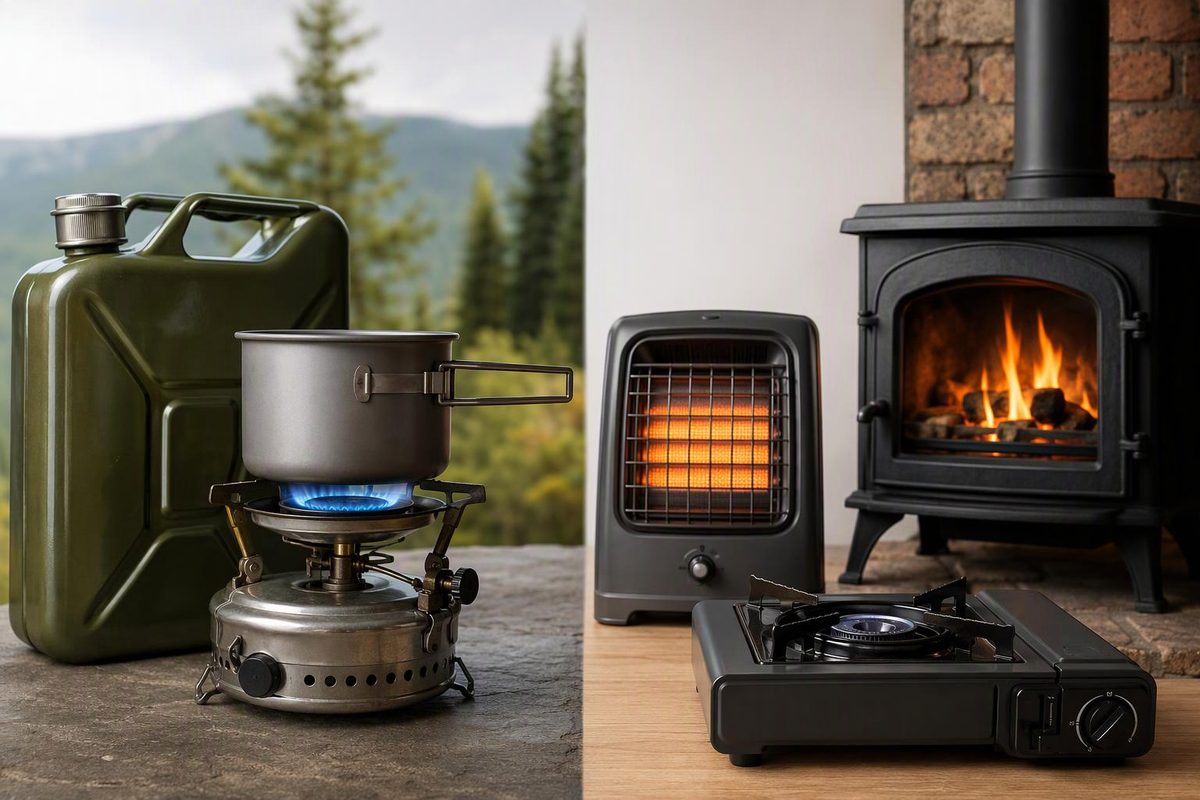
White gas is a highly flammable liquid petroleum fuel used in compatible camping stoves and lanterns. It is commonly called naphtha or Coleman fuel—not the gas supplied through a home’s gas piping. MSR’s liquid-fuel guide identifies these names and cautions that white gas and automotive gasoline are not necessarily interchangeable.
For a homeowner, the important boundary is simple: do not bring a white-gas camp stove indoors for outage cooking or heating, and do not use the fuel to start a fireplace or wood-stove fire. The CDC warns never to use portable gas camp stoves indoors, while Portland Fire & Rescue warns against liquid fuel for lighting wood fires.
Check the appliance before choosing the fuel
The word “stove” does not establish fuel compatibility. Find the exact model and its operating manual before filling a tank or fuel bottle.
For example, the MSR WhisperLite manual describes pressurizing the fuel bottle and a priming or preheating step to turn liquid fuel into vapor for proper operation. Its instructions are not a universal lighting procedure for other stoves.
Use these checks:
- White gas or Coleman fuel: Confirm that the appliance manual accepts it. Buy a labeled camping-fuel product rather than assuming that any solvent labeled “naphtha” is suitable.
- Automotive gasoline: Use it only when the exact model expressly permits it. For example, the WhisperLite International manual accepts white gas and unleaded auto gas with its UG jet, but warns that auto gas may shorten stove life.
- Kerosene: Do not substitute it simply because it is another liquid fuel. That same International model requires its UK jet for kerosene.
- Alcohol or other fuels: Do not improvise. MSR warns that most pressurized liquid-fuel backpacking stoves will not operate safely on alcohol in its fuel-selection guidance.
A manufacturer’s description of a fuel as “cleaner burning” concerns relative deposits and performance—not permission to burn it indoors.
Outdoor cooking does not mean indoor backup heat
The WhisperLite International manual limits the stove to outdoor boiling and cooking. It specifically prohibits enclosed spaces such as a home, camper, car or tent and warns that carbon monoxide can kill without an odor.
Opening a window or running a kitchen exhaust fan is not an exception to an outdoor-only instruction. Neither is setting the camp stove inside a fireplace. Follow the appliance’s outdoor placement and clearance requirements; do not use it as a room heater.
If the actual task is keeping a house warm during an outage, assess the installed heating appliance instead. Our guide to whether gas heat works without electricity explains why the answer depends on the heater’s design.
Refueling and storage: keep vapors away from ignition
Coleman’s Camp Fuel safety data sheet, revised April 7, 2022, classifies the product as a highly flammable liquid and vapor. Its vapors are heavier than air and can travel to an ignition source. A fuel can beside a furnace or water heater is therefore not merely a clutter problem.
Keep the container tightly closed, cool, locked up and in a well-ventilated location away from heat, sparks, flames and pilot lights. Follow the fuel label, appliance manual and local storage rules; do not assume a garage is suitable regardless of what equipment is installed there.
Before using a camp stove, inspect its seals and fuel connections as its manual directs. Do not light a leaking stove or disconnect its fuel system while it is hot or burning. Shut it down and let it cool according to the model-specific instructions before refueling. The WhisperLite manual makes these explicit stop points.
For unwanted or unidentified fuel, contact your local household hazardous-waste collection program for acceptance and handling instructions. Do not pour it into a drain, onto soil, or into another appliance to burn it off; Coleman’s safety data sheet directs disposal through a licensed hazardous-waste contractor or collection site.