
No Hot Water? Narrow Down the Cause Without Taking Unsafe Risks
One cold or lukewarm faucet calls for fixture or local plumbing evaluation. If every tap is affected, use the symptom and heater type to choose safe checks.
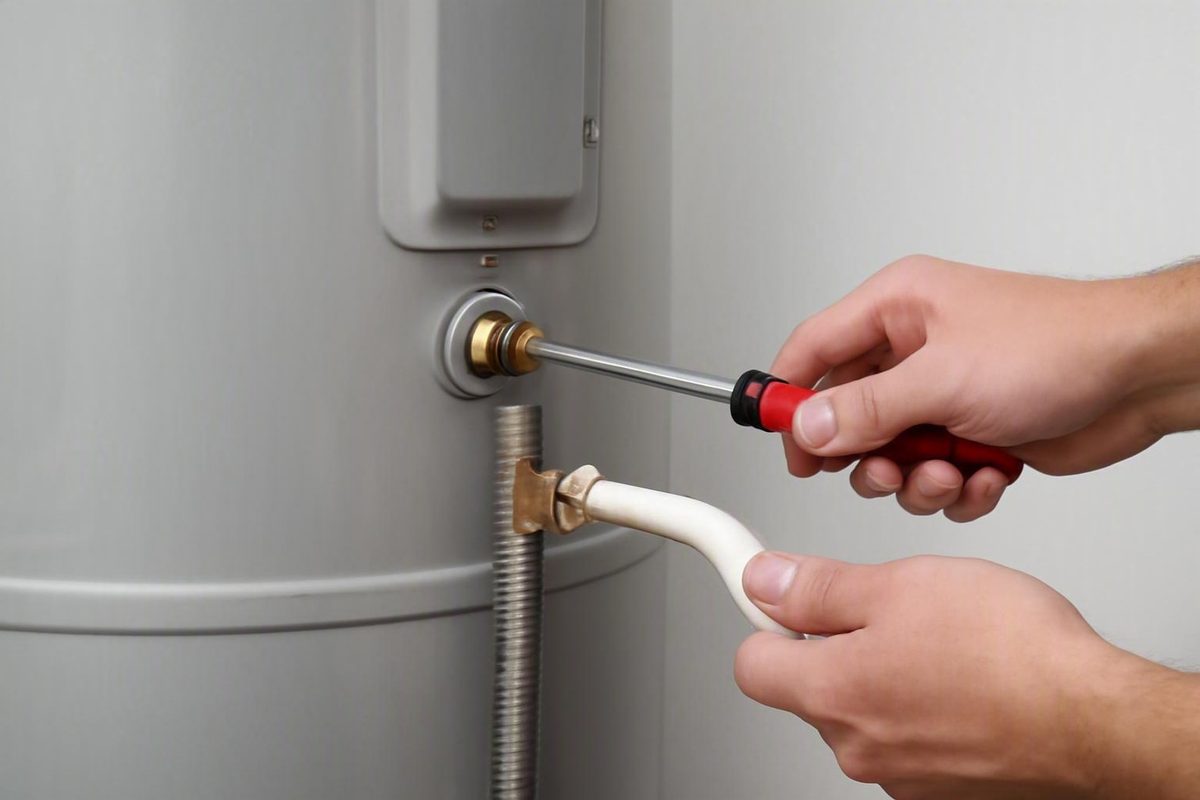
Stop Before Troubleshooting: Hot-Water Warning Signs That Need Immediate Action
Safety first
Stop troubleshooting and obtain professional help if you notice:
- A rotten-egg odor or another reason to suspect a gas leak
- Scorching, damaged wiring, smoke, or an electrical burning smell
- A breaker or high-limit safety control that trips repeatedly
- Hot water actively discharging from the temperature-and-pressure relief valve
- An active tank leak, rapidly spreading water, or substantial corrosion
- Any situation in which you cannot confidently identify and isolate the heater’s energy supply
Gas odors, persistent tank leaks, repeated electrical faults, and leaking pressure-relief valves require professional attention, according to Lennox’s water-heater safety guidance.
If you smell gas, leave immediately. Do not operate switches, use a phone inside, or create a flame. Call the gas utility from a safe location outside. Do not treat a suspected leak as a pilot-light troubleshooting problem. This evacuation response is also described in gas-leak guidance from Grasshopper Heating, Cooling & Plumbing.
Electric water heaters require similar caution. Components can remain energized even when the heater is not actively warming water. Do not remove access panels, touch wiring, test electrical components, or replace thermostats or heating elements unless the supply has been disconnected and you are qualified to perform the work. If wiring is damaged, scorching is visible, or a breaker trips again after one reset, stop and arrange professional diagnosis.
Stay away from an actively discharging temperature-and-pressure relief valve, commonly called a T&P valve. This safety device is intended to prevent dangerous pressure buildup, and discharged water may be scalding. Never cap, plug, block, or disable the valve. Active discharge requires prompt professional evaluation, as emphasized in this water-heater problem guide.
An active tank leak, severe corrosion, or water spreading toward electrical equipment also requires prompt action. Shut down the heater only as directed by its manual and only if the appropriate controls can be reached safely. Do not step into water or approach damaged electrical equipment to reach them.
The rest of this guide uses three safety boundaries:
- Visual-only check: Observe an accessible display, control, breaker position, pilot status, leak location, sound, or odor without opening or dismantling the heater.
- Manufacturer-directed action: Take one limited action only when the appliance label or model-specific manual expressly explains it, such as relighting a pilot or using a homeowner-accessible reset.
- Professional-only diagnosis or repair: Opening electrical compartments, testing circuits, replacing internal parts, working on gas valves or burners, diagnosing combustion air or venting, handling pressure controls, or investigating a leaking tank.
These limits apply even when a repair appears simple online. A water heater combines electricity or fuel with hot water and pressure. Narrowing the likely cause is not the same as proving that a particular component has failed.
First Identify the Exact Hot-Water Symptom
Before focusing on the heater, define what “not getting hot” means. The distinction between one cold shower and a completely cold house is more useful than guessing at a failed part.
Start with two questions:
- Do you have normal cold-water flow? If cold water is available throughout the home, a system-wide water-supply disruption is less likely. If neither hot nor cold water flows, investigate a utility outage, closed main valve, frozen plumbing, or another general supply problem instead of assuming the heater failed.
- Is every hot-water fixture affected? Test more than one sink or shower, allowing for the normal travel time from the heater. If other fixtures become hot normally, the water heater is less likely to be the sole cause.
When only one faucet or shower remains cold or lukewarm, the affected fixture or its local plumbing needs evaluation. Confirm that its hot side is fully open, but do not raise the heater temperature to compensate. The supported first step is to distinguish a general hot-water failure from a local problem, as outlined by the Greenwood Utility District’s troubleshooting guidance.
Next, sort the problem into one of four patterns:
- No hot water anywhere: Water from every hot tap remains cold. Interrupted power or fuel, an ignition problem, or a major heating fault may be involved.
- Lukewarm water everywhere: The heater produces some heat but does not reach or maintain the expected temperature. A changed setting, heavy demand, mineral buildup, or a component fault may be involved.
- Temperature fluctuates: Water cycles between hot and cool. Note whether it happens at one fixture, throughout the home, or when another fixture starts.
- Hot at first, then quickly cold: The heater initially works, but the usable supply is smaller than expected. Recent demand, slow recovery, inadequate capacity, or a component problem may explain it.
Ask when the change began:
- Suddenly after an electrical or gas outage
- Gradually over weeks or months
- Immediately after several showers or overlapping appliance use
- After plumbing work, heater maintenance, or installation
These observations provide context; they do not prove a specific failure. A shortage after several showers may reflect temporary depletion, while a sudden problem after service should be reported to the installer.
Look at the heater’s accessible temperature control to see whether it has been changed. Do not remove a panel to reach an internal thermostat, and do not assume one temperature is appropriate for every home. Appliance instructions and household scald risk vary.
Record the following without touching or dismantling the appliance:
- Puddles and the apparent source of the water
- Corrosion, stains, or rust
- Rotten-egg, electrical, smoky, or unusual water odors
- Rust-colored, cloudy, or otherwise discolored hot water
- Popping, rumbling, banging, hissing, or crackling sounds
- Status-light colors and flash patterns
- Displayed error codes
- Whether the pilot appears lit
- Whether a breaker is on, off, or between positions
Use this compact decision tree:
Is only one fixture affected?
├─ Yes → Evaluate that fixture and its local plumbing.
└─ No, all hot fixtures are affected
   ├─ Fully cold → Check accessible power, fuel, pilot/ignition status, and errors.
   ├─ Lukewarm → Check accessible settings, recent demand, and fault indicators.
   ├─ Fluctuating → Note whether changes follow flow or simultaneous use.
   └─ Hot briefly, then cold → Consider depletion, recovery, capacity, or a fault.
Treat the tree as a sorting tool, not a diagnosis. The same failed component can produce different symptoms in different heater designs.
The Five-Minute Visual and Supply Check
First identify what you own. Read the rating label and manual instead of guessing from the heater’s appearance.
Determine whether the unit is:
- Electric or gas-fired
- Storage-tank or tankless
- A less common heat-pump, boiler-fed, solar, combination, or recirculating system
This guide focuses on conventional electric and gas tank or tankless heaters. Specialized systems should be checked through their manuals and serviced by someone familiar with that equipment.
Then perform this short, bounded check.
1. Review recent utility conditions. Was there a power outage, interrupted gas service, or utility work? If other gas appliances are also unavailable, the problem may extend beyond the heater.
2. Consider recent demand. Did showers, laundry, dishwashing, or a large bath overlap? A storage tank can be depleted temporarily. A tankless unit has no stored supply, but simultaneous flow can exceed its available output.
3. Look around the heater from a safe position. Check for visible water, corrosion, scorching, damaged wiring, and unusual sounds. A puddle does not automatically mean the tank has ruptured: condensation, nearby piping, fittings, a drain valve, a gasket, or relief-valve discharge can also place water near the unit.
Do not touch water that may be hot or that is near electrical equipment. If water is spreading rapidly, visible damage is substantial, or you cannot safely reach the controls, stop.
4. Read accessible controls. Note the temperature setting, status lights, and error codes. Use the exact model number to locate the model-specific manual because indicator meanings vary among products.
5. Follow the appropriate energy-supply branch.
- Electric heater—visual only: Inspect the household electrical panel without opening the heater. A breaker positioned between on and off may be tripped.
- Gas heater—visual only: If there is no gas odor and the area is otherwise safe, look through the intended viewing window or read the status indicator.
- Tankless heater—visual only: Read the display and note whether the failure occurs at low flow, during heavy demand, or when several fixtures operate.
A reset is a limited diagnostic step, not a repair. Temporary recovery does not show why an electrical, overheating, or pressure-related shutdown occurred. A control that fails again points to an unresolved fault, not a need for repeated resetting.
For renters, the safe path is narrower. Photograph the heater label, displayed code, visible leak location, and corrosion from a safe distance. Record which fixtures are affected, when the problem began, whether utilities are operating, and the visible breaker or pilot status. Then contact the landlord or property manager.
Electric Water Heater: Power, Resets, Thermostats, and Heating Elements
An electric water heater may stop heating because power has been interrupted, a breaker has tripped, a safety control has operated, or an internal heating component has failed.
Check the breaker once
At the household electrical panel, locate the correctly labeled water-heater breaker. If it is clearly tripped or sitting between positions, move it fully to off and then back to on once. Do not remove the heater’s access covers.
If the breaker trips again, leave it off and call a qualified electrician or water-heater technician. Repeated resetting is not a repair; the circuit or appliance requires diagnosis. The same stop-after-one-reset limit appears in Lennox’s electric water-heater guidance.
A breaker that appears normal does not prove that power is reaching every component. Confirming voltage requires appropriate instruments, isolation procedures, and electrical competence, so it belongs in the professional-only category.
Understand what the symptom can suggest
Electric storage heaters commonly use thermostats and heating elements. Many have upper and lower elements, although designs vary. A failed element or thermostat may produce:
- Completely cold water
- Water that remains lukewarm
- Less hot water than usual
- Slow recovery after normal use
- Inconsistent heating
Completely cold water can be consistent with a loss of power, an operated safety control, or a major heating fault. A short-lived or lukewarm supply can be consistent with a failed element or thermostat. Neither pattern confirms a particular component.
Do not remove access panels, test voltage or resistance, replace an element, or adjust an internal thermostat. Electrical components can remain energized even when the heater is not actively heating, so internal work requires confirmed isolation and appropriate qualifications.
Treat a high-limit reset as evidence, not a cure
Some electric heaters have a high-limit safety reset behind an access cover; others use different control arrangements. Do not search for or operate one unless the model-specific manual describes a homeowner-accessible procedure.
Any manufacturer-directed procedure must follow the manual exactly, including its power-disconnection requirements. If a reset restores heat only temporarily, it establishes that a shutdown occurred—not why. A safety control that trips again requires professional diagnosis.
Tell the technician:
- Whether the breaker was tripped
- Whether one reset restored operation
- How long the heater worked afterward
- Whether the water was cold, lukewarm, or quickly depleted
- Whether you noticed leaks, odors, sounds, or visible damage
- Whether the problem followed an outage or recent service
This record is more useful and safer than repeated resets or speculative part replacement.
Gas Water Heater: Pilot, Ignition, Burner, and Gas-Control Problems
A gas water heater may fail because of interrupted gas service, an extinguished pilot, a thermocouple problem, electronic ignition failure, burner trouble, restricted combustion air, or a faulty gas-control valve. These are possibilities, not a remote diagnosis.
Keep the emergency distinction clear:
- An unlit pilot or ignition error without gas odor is a troubleshooting symptom.
- A gas odor or suspected leak is an evacuation event.
If there is no gas odor, scorching, or other immediate hazard, visually inspect the status indicator or pilot through the intended viewing area. Do not remove burner covers or reach inside the combustion compartment.
If the pilot is out, relight it only by following the instructions printed on the heater or supplied in its model-specific manual. There is no universal sequence: ignition type, control positions, waiting periods, and safety interlocks vary. General guidance likewise directs users to follow the manufacturer’s procedure rather than improvising, as noted by Allen Service.
A pilot that lights but will not remain lit can be consistent with a thermocouple or gas-control problem. An electronic unit may instead display an ignition or flame-sensing error. Repeated pilot or ignition failure needs professional diagnosis rather than repeated relighting attempts.
Gas valves, burners, gas controls, combustion-air paths, and venting are not trial-and-error homeowner repairs. Their symptoms overlap, and improper work can affect ignition and combustion safety. Do not remove covers or defeat an interlock in an attempt to improve airflow.
Record:
- Status-light color and flash pattern
- Exact error code
- Whether the pilot is visible
- Whether it lights but fails to stay lit
- Whether the burner attempts ignition
- Whether the problem followed a gas outage
- Whether gas service is known to be interrupted
The model number and an accurate sequence of events can make professional diagnosis more efficient.
When the Heater Works but the Hot Water Runs Out
Water that begins hot and later turns cold is not the same symptom as water that never heats. Before assuming a component has failed, reconstruct the demand that preceded the shortage.
Did two showers overlap? Was the washing machine filling while someone used a bath? Was the dishwasher running? A storage heater contains a limited volume of hot water, and cold replacement water enters as hot water leaves. Once demand exceeds the usable supply, the heater needs time to recover.
Four variables shape the result:
- Tank capacity: The amount of heated water stored
- Recovery rate: How quickly incoming water can be heated
- Incoming-water temperature: Colder inlet water requires a greater temperature rise
- Household demand: Flow rate, duration, and simultaneous use
As a general reference, some gas storage heaters may recover in approximately 30–40 minutes, while some electric storage heaters may require around 60–90 minutes. Actual recovery varies with the model, tank size, fuel input, temperature rise, settings, and degree of depletion, according to A. O. Smith’s recovery-time guidance.
Avoid further hot-water use while waiting, then test again. If the normal supply returns after an appropriate recovery period, recent demand may have temporarily depleted an operating tank. If the heater repeatedly falls short under the same ordinary demand it once handled, investigate further.
Capacity can be the problem even when nothing is broken
A tank that is too small for household demand can run out while operating as designed. New occupants, longer showers, a larger tub, a new appliance, or more simultaneous use can expose a capacity mismatch.
Do not confuse capacity with thermostat setting. Raising the temperature is not a universally safe remedy for an undersized heater, particularly where occupants may be more vulnerable to scalding.
Partial component faults can reduce the usable supply
An electric storage heater with a failed heating element or thermostat may still produce some hot water. Depending on the design and failed component, it may recover slowly or provide much less hot water than normal.
A damaged dip tube is another possible professional diagnosis. The tube helps direct incoming cold water within the tank, and damage may reduce useful hot-water availability.
Mineral deposits can impair performance
Sediment in a tank or scale on heat-transfer surfaces can reduce performance, particularly where the water has a high mineral load. Popping, rumbling, crackling, or hissing may accompany mineral buildup, but sound alone does not prove the cause.
Record where and when the noise occurs rather than assuming every sound originates inside the tank.
Flushing may be appropriate in some circumstances, but it is not a universal first step. Draining a tank involves hot water, pressure, valves, hoses, and model-specific procedures. Follow the manual or hire a qualified professional, especially if the drain valve is corroded, the heater has not been serviced for a long time, or you cannot safely isolate and cool it.
Tankless Water Heater: Flow, Demand, Scale, and Ignition
Begin with the status display, indicator lights, model number, and manual.
Possible causes include:
- Ignition failure on a gas-fired unit
- Mineral scale affecting heat transfer or flow
- Fluctuating flow through the heater
- Overlapping demand from several fixtures
- Inadequate capacity for the required flow and temperature rise
- Restricted combustion air on applicable gas models
- An equipment-specific sensor, control, power, or fuel problem
Tankless does not mean unlimited. Output remains constrained by the unit’s sizing, water flow, incoming-water temperature, required temperature rise, available fuel or electrical power, installation, and condition.
A useful clue is whether the unit heats one fixture but struggles when several operate. If one shower works normally but the temperature falls when another fixture starts, combined demand may exceed available capacity. That does not prove the heater is undersized; scale, fuel delivery, flow regulation, or another fault could create a similar pattern.
Also note whether the problem occurs only at one low-flow faucet. Consult the manual instead of attempting to manipulate internal controls or assuming a universal activation threshold.
Record:
- Whether one fixture works normally
- Which combinations of fixtures trigger the problem
- The exact error code or indicator pattern
- Whether the water is fully cold or fluctuating
- Recent utility interruptions
- Recent descaling or maintenance
- Whether the property has hard water
Where scale is suspected, use only a model-directed descaling process or arrange qualified service. Do not apply one interval, chemical, or procedure to every tankless heater.
An error code is a starting point for consulting the manual, not permission to bypass a safety control.
Leaks, Discoloration, Noise, and the Repair-or-Replace Decision
A loss of hot water accompanied by leakage, corrosion, discoloration, or noise changes the task from basic troubleshooting to condition assessment.
Find the apparent water source without touching it
Water near a heater can originate from:
- Condensation
- An inlet or outlet connection
- A fitting or seal
- The drain valve
- A heating-element gasket on an electric tank
- The T&P valve or discharge pipe
- The tank shell
- Unrelated plumbing or nearby equipment
Condensation can sometimes be mistaken for leakage, particularly during heavy demand, initial filling, or humid conditions. Conversely, an intermittent leak may leave only staining or corrosion by the time it is inspected.
An external connection, replaceable valve, or gasket may be repairable after proper diagnosis. Water leaking through a corroded tank shell generally points toward replacement because the storage vessel itself has failed. That distinction is also made in this repair-versus-replacement overview.
Do not touch, test, lift, or cap a leaking relief valve. Keep away from its discharge path because the water may be scalding. The underlying problem may involve the valve or broader system conditions, but either way, disabling a pressure-safety device is dangerous.
Discoloration and odor have several possible causes
Rust-colored or metallic-looking hot water can be associated with corrosion, deterioration of an anode component, or plumbing materials. Odorous hot water may involve the heater, bacteria, an anode reaction, or another part of the plumbing system. Compare hot and cold water at more than one fixture and report whether the symptom affects one side or both.
Do not assume discoloration proves the tank is failing, and do not improvise with temperature changes or chemical treatment. The heater and plumbing system may need to be evaluated together.
A rotten-egg odor in the water is not automatically the same as fuel gas in the room. If the odor is in the air near gas equipment or you cannot confidently identify its source, follow the gas-leak response: leave and call the gas utility from outside.
Interpret noise cautiously
Popping, rumbling, crackling, or hissing can be associated with sediment or scale, but they are not conclusive. Internal wear and other operating conditions can produce similar sounds.
Banging in pipes may be associated with water hammer. Hissing may come from escaping water or water contacting a hot surface. Record whether the sound occurs during burner operation, while a fixture closes, or continuously, and let a technician identify its source.
Use several factors when deciding between repair and replacement
Do not replace a heater solely because it has reached a particular age. Consider:
- The exact leak source
- Tank and connection condition
- Extent of corrosion
- Nature of the failed component
- Remaining warranty
- Previous repair history
- Frequency of failures
- Likely durability of the proposed repair
- Availability of compatible parts
- Heater age
- Whether the equipment still meets household demand
One commercial repair guide gives approximately 8–12 years as a typical range for traditional tank heaters, but this is only a broad planning estimate—not an automatic replacement deadline. Installation, maintenance, water quality, operating conditions, and physical condition all affect the decision, as the cited provider’s repair-versus-replacement guide also explains.
A newer heater with a replaceable thermostat, element, ignition component, valve, or external connection fault may be a reasonable repair candidate. A tank-shell leak, extensive corrosion, or recurring major failure weighs more strongly toward replacement regardless of age.
Before calling a technician, assemble this checklist:
- Heater type: tank or tankless
- Fuel: electric, natural gas, propane, or other
- Manufacturer and model
- Approximate installation date or age
- Warranty information
- Exact symptom: cold, lukewarm, fluctuating, or quickly depleted
- Whether one fixture or all fixtures are affected
- Error code or status-light pattern
- Breaker position and result of one reset, if attempted
- Pilot or ignition behavior
- Sounds and when they occur
- Odors and whether they come from the water or surrounding air
- Hot- and cold-water discoloration
- Visible leak location
- Recent household demand
- Recent outage, service, or installation work
- Flushing, descaling, and maintenance history
For prevention, periodically look for leaks, staining, corrosion, and changes in performance. Follow the appliance manual for inspection and model-appropriate maintenance. Flushing or descaling may help manage mineral buildup, especially in hard-water areas, but the procedure and timing should follow manufacturer instructions or qualified professional advice.
Frequently Asked Questions
Why is my water cold at only one faucet or shower?
If other fixtures produce hot water normally, the heater is less likely to be the sole problem. The affected fixture or its local plumbing needs evaluation.
Confirm that the hot side is fully open and compare it with another fixture. Do not raise the whole-house water temperature to compensate. Fixture-specific testing may be required to identify the actual fault.
How long should I wait for a water heater to recover?
Some gas storage heaters may need roughly 30–40 minutes, while some electric storage heaters may take approximately 60–90 minutes. These are general reference ranges; actual recovery depends on tank size, model, temperature rise, settings, incoming-water temperature, and recent demand, according to A. O. Smith.
Avoid further hot-water use while waiting, then test again. If the normal supply returns, temporary depletion may have been the issue. If ordinary demand repeatedly produces an unusually short supply, the heater’s capacity, condition, or components need evaluation.
Can I reset my water heater if it is not heating?
A clearly tripped electric water-heater breaker may be switched fully off and then on once from the household panel without opening the appliance. If it trips again, leave it off and call a qualified professional.
Use an appliance reset or gas-ignition procedure only when the model-specific manual directs you to do so. A reset that restores heat temporarily does not establish why the control operated. The general rule is to follow the manufacturer’s instructions and seek service when a reset does not hold, as reflected in the Greenwood Utility District guidance.
Does a leaking water heater always need to be replaced?
No. Water may come from condensation or a potentially repairable connection, fitting, drain valve, gasket, or other external component. The source must be identified before deciding.
Leakage through a corroded tank shell generally points toward replacement. Active relief-valve discharge requires prompt professional evaluation, and the valve must never be capped or plugged. Keep away from hot discharge, spreading water, and nearby electrical equipment; external leaks and tank-body leaks are distinguished in this repair-versus-replacement guidance.
Do popping or rumbling sounds mean the tank contains sediment?
They can be associated with sediment or mineral scale, especially when hard water and declining heating performance occur together, but the sound is not proof. Crackling and hissing can have several causes, while banging in piping may be related to water hammer.
Record when and where the sound occurs. Before flushing or descaling, consult the appliance manual or a qualified professional because the work can involve hot water, pressure, valves, fuel, and model-specific procedures.
The final action hierarchy is straightforward: leave immediately for a suspected gas leak, and stop troubleshooting for scorching, active relief-valve discharge, active tank leakage, or recurring electrical trips. Otherwise, determine whether one fixture or the whole home is affected, define the symptom, check only accessible settings and energy supplies, and consult the model-specific manual. If one permitted reset or relighting attempt does not hold—or if leaks, corrosion, error codes, or suspected component faults remain—give your documented observations to a qualified technician instead of continuing trial-and-error repairs.