
A Professional Fireplace Insert Replacement Often Costs $1,200 to $12,000
Estimate fireplace insert replacement cost by fuel, venting, removal, utilities and chimney condition—and compare complete quotes accurately.
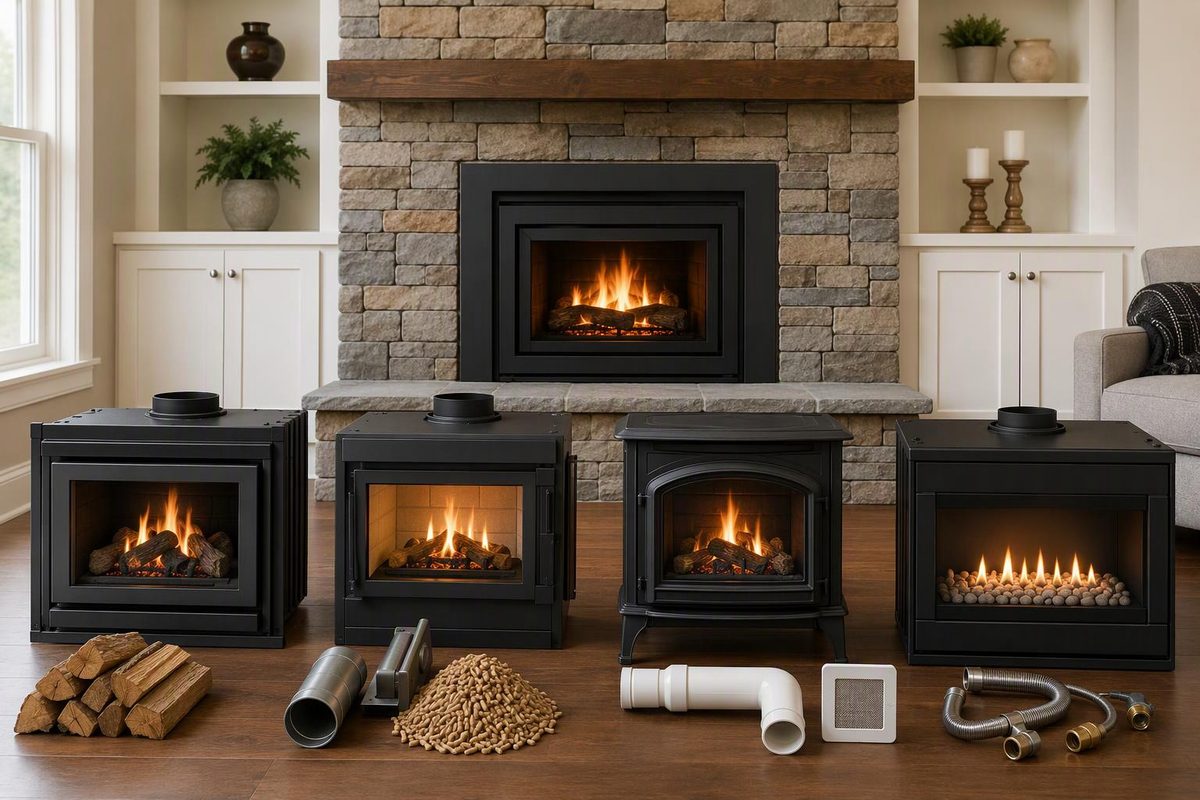
For a professionally installed project, a practical 2026 starting budget is $1,200–$3,400 for electric, $7,000–$8,800 for a gas insert, and $8,000–$12,000 for a wood insert. These are not national averages: they are published ranges from one hearth dealer serving southeastern Pennsylvania, and local labor, permits and project scope can move the result substantially.
The number that matters is the complete installed price—not the appliance price alone. A replacement may include removing the old unit, confirming fireplace compatibility, modifying utilities, installing the venting system specified for the new model, obtaining permits and repairing concealed chimney or finish damage.
2026 planning ranges
| Project | Planning range | Basis and major variables |
|---|---|---|
| Professionally installed electric fireplace project | $1,200–$3,400 | Dealer-reported range for the unit and professional installation; recessing, carpentry and electrical work affect the total (The Stove Shop) |
| Gas insert in a masonry fireplace | $7,000–$8,800 | Dealer-reported installed range including the insert, front, surround, venting and gas, electrical and chimney labor (The Stove Shop) |
| Wood insert in a masonry fireplace | $8,000–$12,000 | Dealer-reported range including venting and labor; model choice, chimney height and flue condition are major variables (The Stove Shop) |
| Complete prefabricated gas-fireplace replacement | $8,200–$16,200 | Dealer-reported range that may include the unit, removal, venting, utilities, mantel, finish work and labor (The Stove Shop) |
An electric swap can cost less than the table when it is simply a compatible appliance using an existing suitable receptacle. Manufacturer Valor gives a much broader U.S. range of $300 to more than $5,000 for electric fireplaces, from store-bought units to built-ins. Its gas-fireplace range is $2,500 to more than $15,000, illustrating how little a broad national figure says about one specific replacement (Valor).
The last row is a different class of work. A true insert fits into an existing masonry fireplace or a factory-built fireplace specifically approved for it. A metal fireplace built into a framed wall is not necessarily an insert. Replacing that entire fireplace can require opening the wall, changing proprietary venting, rebuilding the chase and restoring the finish.
What determines the replacement cost
Removal and disposal
Confirm whether the proposal includes disconnecting, lifting out and disposing of the old appliance. Gas, wiring and vent connections make removal more than a demolition job, and a heavy insert can damage the hearth or floor if it is handled improperly.
A replacement contractor may bundle this work into the installation price. If the quote lists removal separately, check whether it also includes gas or electrical disconnection, floor protection, vent removal and disposal. Do not automatically add a generic online removal allowance to a quote that already includes the work.
Appliance, front and accessories
The advertised appliance price may exclude the decorative front, surround panel, blower, remote, thermostat, trim and delivery. Heat & Glo advises treating the base price as a starting point because installation, venting and options are separate variables (Heat & Glo).
Do not choose a replacement from the opening width alone. Record the front and rear width, opening height, depth, hearth projection and nearby mantel or trim. Then check those measurements against the installation manual for the exact model. The worksheet in Chimney Insert: How to Check Fireplace Compatibility provides a useful sequence.
Venting or chimney-liner work
An existing liner is not automatically suitable for the replacement. The new appliance’s fuel, required vent diameter, approved components and installation instructions must agree with the proposed vent system.
The Chimney Safety Institute of America notes that changing appliances or fuels may require venting modifications; replacing a wood insert with a gas insert, for example, will generally require chimney-system changes such as adding a liner. It also recommends checking the chimney for obstructions, cracks and deposits before adding a new appliance (CSIA).
For solid-fuel inserts, the 2021 International Mechanical Code requires listed and labeled fireplace inserts to be installed according to the manufacturer’s instructions. The same code requires pellet appliances to be installed according to their listing (ICC, Sections 904–905). Your jurisdiction may have adopted another edition or local amendments.
For a wood project, compare the liner’s diameter, material, insulation, connectors, cap and warranty—not merely whether the bid says “liner included.” See how to specify the complete chimney liner kit.
Chimney, hearth, utilities and finishes
A replacement can uncover work the old unit concealed:
- cracked, obstructed or deteriorated flue sections;
- water-damaged masonry;
- hearth protection or mantel clearances that do not meet the new model’s instructions;
- an absent, inaccessible or inadequately sized gas supply;
- no suitable electrical supply at the fireplace;
- an irregular opening requiring a custom surround;
- wall, trim or flooring repairs after removal.
Establish the fireplace and chimney condition before ordering a nonreturnable appliance. For a wood insert, follow the decision gates in Installing a Wood-Burning Fireplace Insert Safely.
When buying a wood insert in the United States, look up the exact manufacturer and model in the EPA Certified Wood Heater Database. EPA says the database identifies certified heaters and provides searchable emissions, efficiency, fuel-type and carbon-monoxide data.
Compare complete quotes, not bottom lines
A useful written proposal should identify:
- The exact appliance model and fuel
- Whether that model is approved for the existing fireplace type
- Old-unit disconnection, removal and disposal
- Chimney inspection scope—or explicit assumptions about chimney condition
- Every vent or liner component, including insulation where required
- Gas and electrical work
- Front, surround, controls and blower
- Hearth, mantel, wall and finish alterations
- Permit and inspection responsibility
- Startup checks, owner instruction and labor warranty
If one quote is thousands of dollars lower, look first for omitted liner work, utilities, accessories, finish restoration or permits. A bare appliance price and a turnkey installation are not competing bids.
Finally, do not subtract an expired federal incentive from a 2026 budget. The federal biomass-stove tax credit applied to qualifying products purchased and installed from January 1, 2023, through December 31, 2025 (ENERGY STAR). The IRS likewise lists the Energy Efficient Home Improvement Credit amounts through 2025 (IRS). State, local or utility incentives may differ.