
What a Fireplace Chimney Cap Does—and Which Types Exist
Learn how a fireplace chimney cap limits rain, animal entry and escaping embers, plus how masonry caps differ from listed vent terminations.
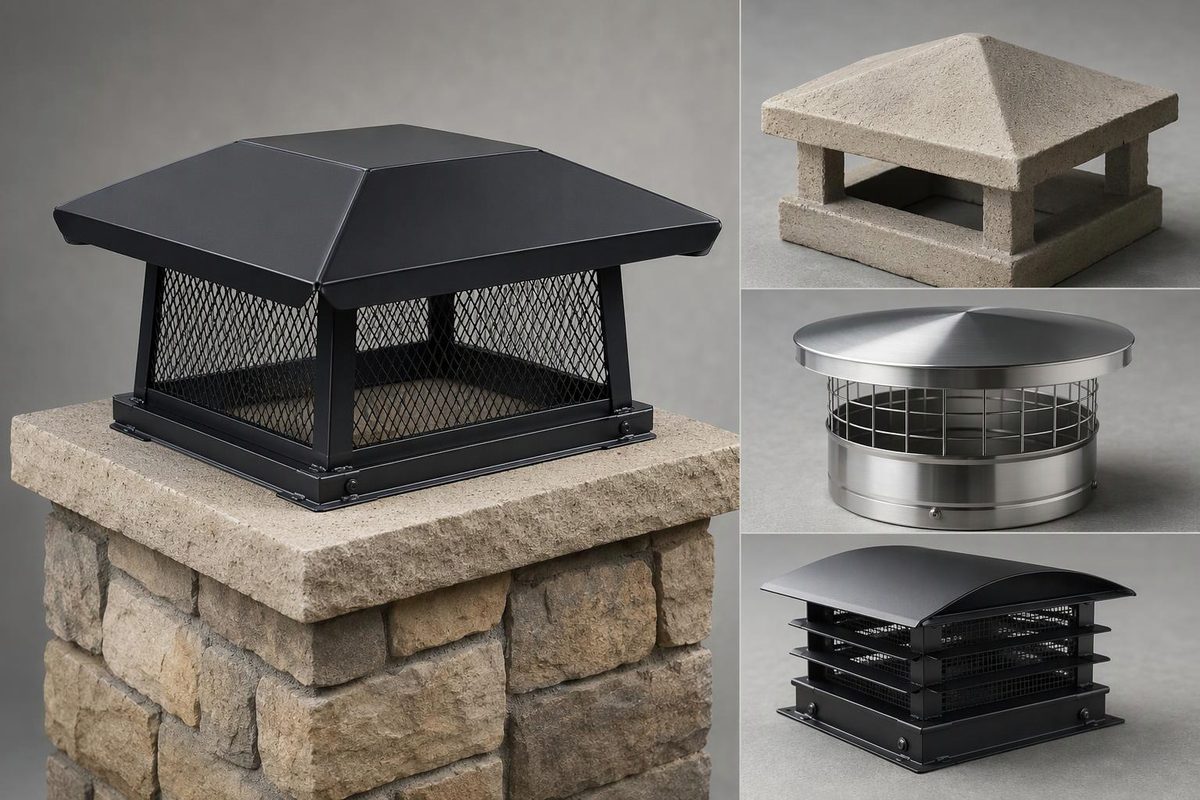
A fireplace chimney cap is a protective hood over the chimney’s exhaust opening. On a typical masonry chimney, it has a roof to shed rain and screened sides that let smoke escape while keeping animals and debris out. It protects an opening; it must not seal the exhaust path shut. Factory-built chimneys and gas vents use system-specific terminations rather than interchangeable masonry caps.
What the cap protects against
A cap serves several separate purposes:
- Rain and snow entering the flue. The hood limits direct precipitation down the chimney. Water entry can contribute to rusted dampers and fireboxes, deteriorated flue liners and other damage. The Chimney Safety Institute of America’s water-damage guidance explains these problems and the role of caps in keeping rain out.
- Animals, leaves and debris. Screened sides provide a barrier at an otherwise open chimney outlet—another protective function described in the CSIA guidance.
- Escaping embers, when fitted with an appropriate spark arrestor. A spark-arrestor screen helps contain embers that could ignite roofing or nearby vegetation. The Orange County Fire Authority’s chimney guidance describes this fire risk and the role of spark-arrestor mesh.
Not every screened cap satisfies local spark-arrestor requirements. Mesh requirements depend on the applicable rules and vent system. Do not choose finer mesh on the assumption that more screening is always better: screens also need inspection and cleaning. For example, DuraVent’s DuraTech instructions specifically require checking spark-arrestor screens for buildup during use.
Does your fireplace need one?
For an open masonry flue, a cap provides useful protection even when the fireplace is not being used: rain, wildlife and debris do not depend on the heating season. Whether a particular cap or spark arrestor is legally required depends on the locally adopted code and site conditions.
For a factory-built fireplace or chimney, the termination is part of the specified system. Follow the fireplace and chimney manuals rather than treating it as an optional accessory. As one example, DuraVent requires authorized DuraTech parts to maintain its listed chimney system and prohibits improvised or mixed components in its installation instructions.
For a direct-vent gas fireplace, use the termination approved for that appliance and venting arrangement—not a generic screened masonry cap. DirectVent Pro instructions require appliance approval and warn against unauthorized components or modifications.
The main chimney cap types
Single-flue masonry cap
This covers one flue opening. It is the familiar small hood with screened sides, commonly mounted at a projecting flue tile. Fixed-size and adjustable versions exist; “adjustable” describes its fit range, not compatibility with every chimney system. HY-C’s cap overview distinguishes single-flue, multi-flue and adjustable designs.
Multi-flue masonry cap
A larger hood covers a group of flue outlets rather than placing a separate cap on each one. Some designs also shelter more of the chimney top. HY-C describes this arrangement in its multi-flue cap guidance. Covering several outlets does not mean combining their exhaust passages.
System-specific termination
Factory-built chimneys and gas vents have caps designed for their particular systems. Diameter alone is not enough to establish compatibility; the appliance approval, chimney or vent product line, and installation instructions matter.
Specialized wind cap
A wind-oriented termination is a separate choice from ordinary rain protection. If the concern is smoke entering the room during gusts, start with the high-wind chimney cap guide rather than assuming any new hood will solve the problem.
What a cap cannot fix
A cap is not a repair for failed flashing, a cracked crown, a leaking chase cover or a damaged liner. CSIA’s water-entry guidance identifies several of these as independent leak sources. Nor should a cap be confused with a damper that closes the flue when appropriate.
If you already have a cap but it is loose, damaged or obstructed, the next task is assessment—not simply buying another style. Use the chimney cap replacement guide for fit, condition and compatibility checks before ordering.