
Check Your Plug-In CO Detector Against the KH158 Warning
Check model KH158 against 18 displayed brands, identify the affected plug-in CO detector, and verify UL 2034 or ETL replacement markings.
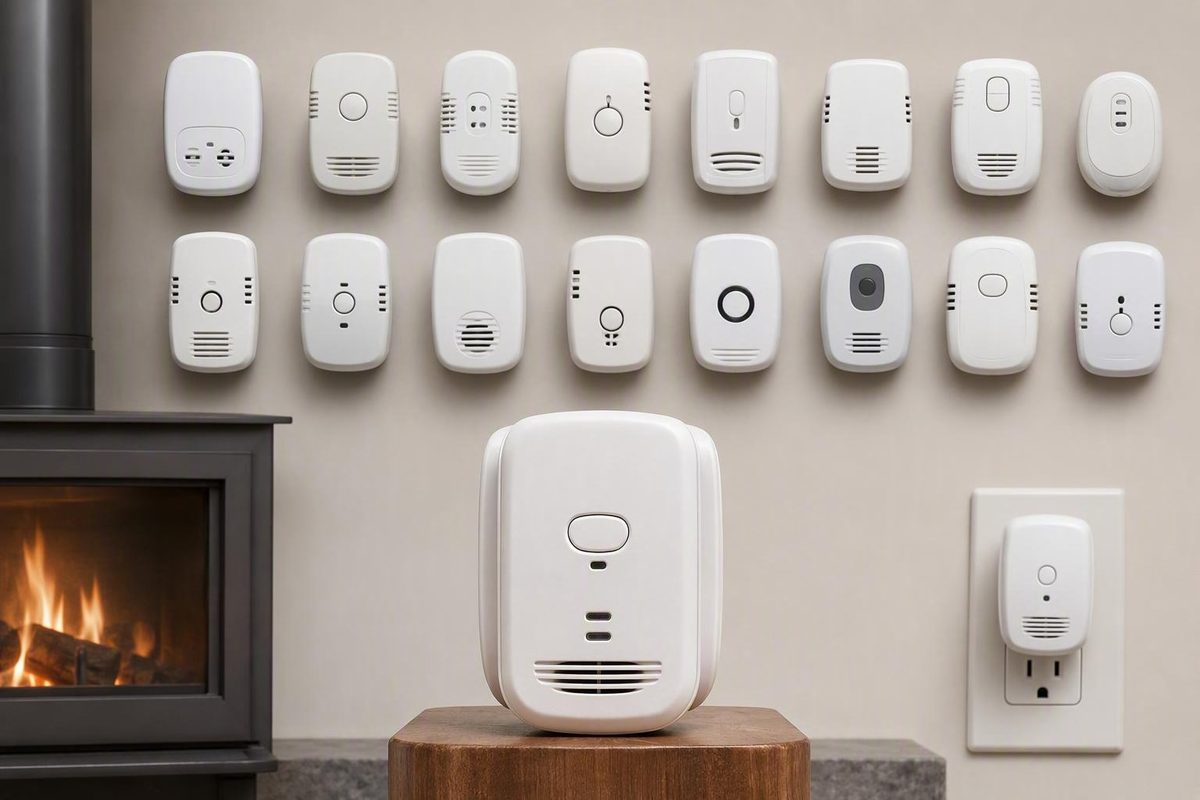
Your plug-in detector is on the CPSC warning list if its model is KH158 or KH-158 and it carries one of the brand names displayed in CPSC Product Safety Warning 26-706. Stop using a confirmed match, dispose of it as CPSC directs, and promptly install a working carbon-monoxide alarm that meets UL 2034. A similar appearance, listed brand, retailer, or plug-in design alone does not confirm a match.
The warning covers a plug-in “4-in-1” natural-gas and carbon-monoxide detector. The affected device detects gas and CO while displaying temperature and humidity. CPSC says it can fail to alarm when gas or carbon monoxide is present.
Select the model, brand, physical traits, and replacement markings; the checker gives a result below.
Choose what is printed on your detector. Physical labels and order-specific records carry more weight than appearance.
A marketplace title, star rating, familiar case, or generic “CO detector” claim is not the same as certification to UL 2034.
| Evidence | What It Means | Decision Weight |
|---|---|---|
| KH158 or KH-158 + displayed brand | Confirmed Warning 26-706 match | Controlling |
| Different exact model | Not established as covered by this warning | Controlling for 26-706 only |
| KH158 + unlisted brand | Published brand-count discrepancy leaves result unresolved | Ask CPSC |
| Displayed brand only | Brand may appear on more than one model | Insufficient |
| Matching controls and display | Supports identification but does not prove it | Secondary |
| Retailer, date, or price | Helps find an order record | Secondary |
| UL/ETL mark + UL 2034 documentation | Replacement shows the requested certification evidence | Required replacement check |
CPSC states 19 brand names but displays 18 distinct names. Do not infer an omitted name.
Emergency: If CO exposure is suspected, go outside to fresh air and call 911. Do not wait for this identification check. Source: CPSC Product Safety Warning 26-706 and CPSC carbon-monoxide guidance.
Model KH158 And A Displayed Brand Confirm A Match
The strongest identifying evidence is the model number printed on the detector, its packaging, or an order-specific record. Look for either spelling:
- KH158
- KH-158
The official CPSC warning identifies model KH158. Consumer Reports has also documented the hyphenated KH-158 spelling. Treat the hyphen as a formatting difference, not evidence of a different model.
CPSC’s page says the detector was sold under 19 brand names, but its displayed list contains these 18 distinct names:
- ARIKON
- ELECOIN
- FLUNGSKY
- HAOKESITE
- Hembisen
- JNHCD
- KAKIMENT
- KH Alert
- KOABBIT
- NICGOL
- NORJAN
- OUMEBIU
- Sooguard
- Vilfet
- Vzmcov
- WESHLGD
- XLA Alert
- YOJOCK
Do not guess at a nineteenth name. A unit marked KH158 under one of these 18 displayed names is a confirmed match. If KH158 appears with another brand, the published information does not establish whether it is included or excluded; ask CPSC to confirm.
A listed brand without KH158 is not enough. One brand can appear on multiple products, while Warning 26-706 identifies a particular model.
Appearance Provides Supporting Evidence, Not Confirmation
CPSC describes the affected detector as a white, gray, or black plug-in unit with a digital display. Its front has a SELF-TEST button and three labeled lights:
| Light | Label | Color |
|---|---|---|
| Power indicator | POWER | Green |
| Fault indicator | FAULT | Yellow |
| Alarm indicator | ALARM | Red |
The device was marketed as performing four functions: carbon-monoxide detection, combustible or natural-gas detection, temperature display, and humidity display.
Those traits can help identify a unit whose paperwork is incomplete, but other detectors can have the same general shape, display, test button, and indicator lights. Do not classify a detector from a photograph or marketplace listing alone.
Inspect the exterior without opening or disassembling it. The label may be on the back or bottom, although the warning does not specify one guaranteed location for every affected unit.
If the label is faded or missing, search the original box, instructions, receipt, confirmation email, photographs, seller messages, and order history. Search for both KH158 and KH-158. An invoice or archived description tied to your order is stronger evidence than a seller’s current generic listing.
CPSC Reports 91 Failures Among 376,974 Sold Units
CPSC reports 91 instances in which the detectors failed to alarm in the presence of gas and/or carbon-monoxide leaks. It says 376,974 units were sold from June 2024 through July 2026 for $13 to $140 through Amazon, eBay, AliExpress, Micro Center, and Snapklik.
The agency names Shenzhen Kanghua Shengshi Industrial Co., Ltd., doing business as KH Alert, of China, as the manufacturer. Consumer Reports also summarized the failure reports and sales information.
The retailer, price, and sales period may help locate an old order, but none proves that a detector is a KH158. A matching model should not be dismissed because the remembered price or seller differs.
Consumer Reports previously discussed consumer reports alleging detector failures and associated hospitalizations. Those hospitalization accounts were allegations in submitted reports, not hospitalization findings established in the formal CPSC warning. It also reported that Hembisen disputed complaints concerning the detector; that disagreement does not supersede CPSC’s warning.
Confirmed, Different, And Unresolved Results Require Different Actions
A Confirmed Match Must Be Removed
Treat the unit as confirmed when a physical label, package, or reliable order record shows KH158 or KH-158 and the detector carries one of the 18 displayed brand names.
Do not let an illuminated power light, normal-looking display, or successful response from the self-test button override the model identification. The reported defect concerns failure to alarm in the presence of gas or carbon monoxide.
CPSC directs owners to stop using and dispose of the affected detector immediately. If there is no suspected exposure, you may first photograph the label and front panel and save the receipt, order number, seller name, and order page. Follow local disposal rules rather than assuming household trash or an electronic-waste program is correct in every area.
A Different Model Is Outside This Specific Warning
If the exact model is different, Warning 26-706 does not establish that the detector is affected. That narrow result does not prove the detector works, meets the applicable standard, remains within its service life, or is unaffected by another product action.
Search the exact brand and model through the official CPSC recalls database. Product actions can depend on model numbers, date codes, serial numbers, manufacturing periods, or lots.
Missing Or Conflicting Identification Remains Unresolved
Treat the identification as unresolved when the model is unreadable, a displayed brand appears without a model, the unit only resembles CPSC’s photographs, or the order record and physical label conflict.
A KH158 carrying a brand absent from the displayed list is also unresolved because the official page’s stated count and displayed names do not agree. Contact CPSC rather than declaring it covered or excluded.
While checking records, do not leave the home dependent on the questionable unit as its only CO protection. Install dependable alternative protection promptly.
A Replacement Must Show Evidence Of UL 2034 Compliance
CPSC directs consumers to install a new, working CO alarm that meets the UL 2034 safety standard. Check the replacement’s packaging and official documentation rather than relying on a marketplace title, case design, customer rating, or the general words “carbon monoxide detector.”
A replacement may carry a UL Listed or ETL Listed certification mark. In either case, verify that the package or product documentation identifies UL 2034 as the standard for the CO alarm. A certification logo without the associated standard does not provide the complete verification needed here.
Use this sequence for a confirmed KH158:
- Stop relying on the affected detector.
- If safe, photograph its label and preserve the order record.
- Dispose of it as CPSC directs and according to local rules.
- Obtain a CO alarm documented as meeting UL 2034.
- Verify its UL Listed or ETL Listed certification information.
- Install and test it according to its instructions.
- Confirm that the remaining home has appropriate CO-alarm coverage.
CPSC recommends working CO alarms on every level of the home and outside sleeping areas. It prefers battery-operated alarms or alarms with battery backup and advises regular testing and battery checks. Those recommendations appear in the CPSC Carbon Monoxide Information Center.
Follow the replacement manufacturer’s placement, testing, battery, and end-of-life instructions. Save the receipt and photograph the new model label and certification information.
Warning 26-706 Does Not Provide An Agreed Recall Remedy
The action is CPSC Product Safety Warning 26-706, not a manufacturer-agreed recall. Consumer Reports reported that the manufacturer had not agreed to conduct a recall. The warning therefore does not establish a manufacturer-provided repair, replacement, or refund program.
You may contact the seller separately about a possible return or refund, but that effort should not delay removal and replacement. Keep the order record and label photograph if you plan to request a remedy.
A consumer report, safety warning, and agreed recall have different meanings:
| Action | What It Establishes |
|---|---|
| Consumer report | An allegation submitted for review |
| CPSC warning | Formal agency hazard guidance |
| Agreed recall | Corrective action accepted by the firm |
SaferProducts.gov collects reports of harm or potential harm. A report there is not automatically a recall or a formal determination that a product is defective.
Suspected Carbon-Monoxide Exposure Takes Priority
Carbon monoxide is colorless and odorless. If an alarm sounds or CO poisoning is suspected, go outside to fresh air immediately and call 911, following CPSC’s emergency guidance.
Do not delay leaving to read a label, photograph the detector, search an order history, press SELF-TEST, or troubleshoot the unit. Product identification can wait until everyone is safely outside.
For a nonemergency identification problem, compare the unit with the live CPSC warning. If the model remains unreadable or the records conflict, contact CPSC at 800-638-2772 with the brand, every readable part of the model, front and label photographs, seller, purchase information, order description, and any serial number or date code.
The controlling identification rule remains narrow: KH158 or KH-158 plus one of the 18 displayed brand names is a confirmed Warning 26-706 match.