
Choosing a Propane Heating Stove Starts With the Vent Path
Check propane stove fuel approval, venting, clearances, heating range and outage operation before buying a freestanding home heater.
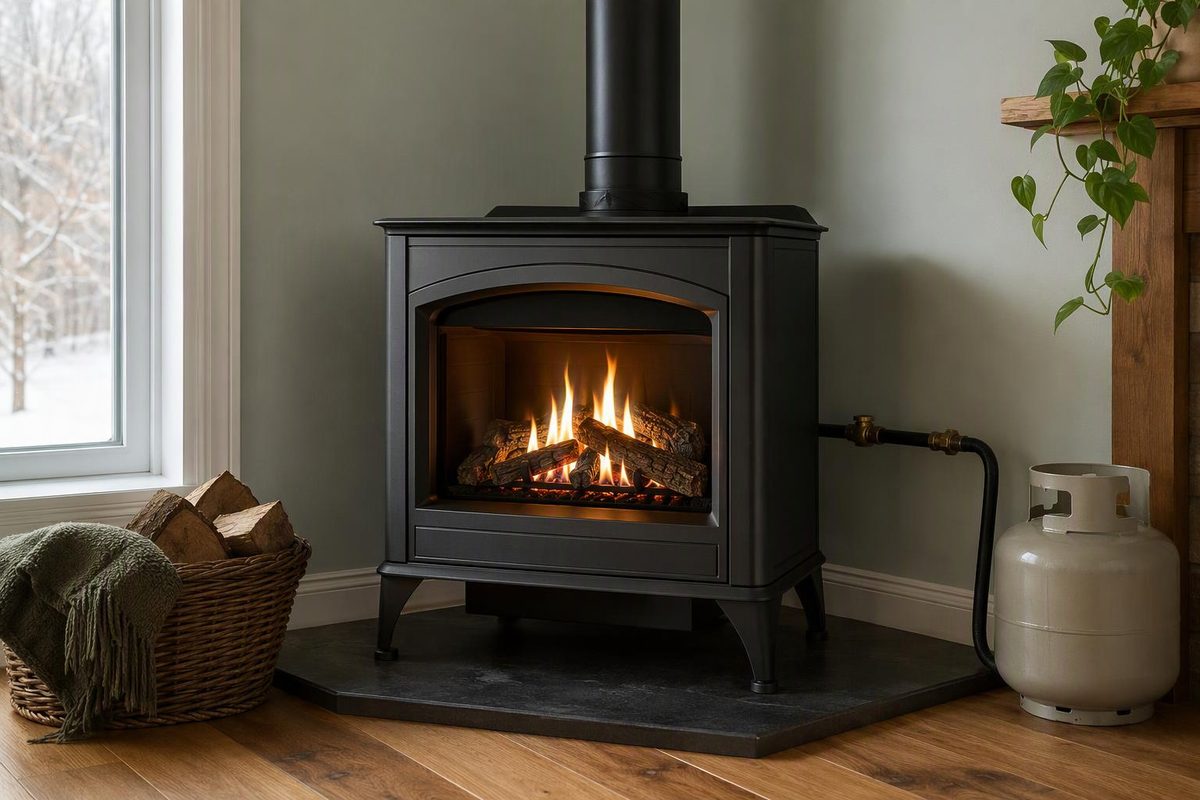
For home heating, start with a listed heating appliance approved for propane, then verify that its vent system and clearances fit the building. A freestanding gas stove, a kitchen range and a portable camping stove are not interchangeable.
This guide covers freestanding propane heating stoves. Never use a cooking range to heat the house, and keep outdoor-only camping stoves outside. EPA’s cooking-appliance guidance and Technical Safety BC’s safety guide explain those boundaries.
1. Verify the fuel before planning the installation
Obtain the exact model number, rating-plate information and matching installation manual—not just a brochure saying “natural gas or propane.” For a used stove, ask for photographs of the plate and any conversion label before buying.
Confirm whether the appliance is already configured for propane or requires an approved conversion kit. Connecting propane to a natural-gas configuration is not a substitute for conversion. The Jøtul GF 370 DV II IPI manual, for example, restricts use to the gas identified on the rating plate unless a certified conversion kit is used, and requires qualified installation and service.
Have the installer and propane supplier confirm the tank, regulator and gas piping can support the proposed appliance alongside existing loads. Ask the local building authority about permits, inspections and location restrictions before committing to a stove.
Stop point: If the fuel configuration cannot be verified, do not connect or light the appliance.
2. Establish the vent path—not just the pipe diameter
A direct-vent system supplies outside combustion air and carries exhaust outdoors. In a concentric system such as DuraVent DirectVent Pro, the outer passage brings air to the appliance while the inner pipe exhausts flue gases. The vent and appliance are approved as a system; matching diameter alone does not establish compatibility.
Before purchase, have the installer document:
- The approved vent brand, series and termination cap.
- Required vertical rise, allowed horizontal run and elbow limits.
- Air-space clearances at walls, ceilings and concealed framing.
- Exterior termination distances from openings, air intakes, projections and other obstructions.
- Whether an existing chimney can be used through an explicitly approved conversion arrangement.
Do not assume existing wood-stove pipe, pellet vent or B vent can serve a direct-vent stove. Check the appliance’s approved systems. Our concentric vent kit guide explains why the appliance approval comes before kit selection.
Fuel can change the permitted layout. The Jøtul example allows certain snorkel terminations with natural gas but explicitly prohibits them with propane. Its conventional horizontal termination also specifies different minimum horizontal sections for the two fuels. Those are model-specific requirements, not universal propane-stove rules. See the manual’s venting sections.
Stop point: If no approved vent route fits the building, choose another location or appliance rather than improvising a connection.
What about vent-free propane stoves?
Vent-free, or unvented, models are a separate category—not direct-vent stoves with the pipe omitted. EPA identifies unvented gas space heaters as indoor sources of combustion pollutants, including carbon monoxide and nitrogen dioxide. It advises considering indoor-air effects and following the heater’s operating instructions. EPA combustion-products guidance.
For a new heating installation, start your comparison with direct-vent models, which carry exhaust outdoors. If considering vent-free equipment, first verify local permission and all model-specific room and use restrictions.
3. Measure clearances and floor requirements
Measure the proposed location against the manual’s diagrams, including rear, side, corner, ceiling and any alcove requirements. Check where each dimension starts; it may be the stove body or top, rather than the glass barrier or vent collar.
A decorative noncombustible surface does not automatically eliminate combustible material behind it. The Jøtul manual explicitly includes concealed combustibles when discussing clearances. It also approves that particular model directly on combustible flooring without additional floor protection—an example of why wood-stove hearth rules should not be transferred to a gas stove. Model-specific installation requirements.
Leave room for service access and normal traffic. Install all manufacturer-required glass safety barriers; the Jøtul example requires its supplied barriers during operation and recommends additional protection where children or other at-risk people may approach. Hot-surface precautions.
4. Compare the propane heating range and outage operation
Ask the installer to assess the room’s heat loss and intended heated area. Do not choose solely from an advertised “heats up to” square-foot figure. Compare both minimum and maximum propane input, and distinguish fuel input from useful heat output.
For illustration, the Jøtul manual lists propane input at 20,750–24,000 BTU/h, compared with 18,170–28,000 BTU/h for natural gas. The headline natural-gas maximum therefore does not describe its propane performance. Those figures are an example, not a sizing recommendation. Specifications.
If outage heat matters, ask what remains operational without household electricity. That same model permits battery-backed burner control during a power failure, but its fan and accent lighting do not operate without line power. Have the installer demonstrate the approved backup procedure before relying on it. Control-system requirements.
5. Get a complete installation quote
Request separate allowances for the stove, approved venting, wall or roof penetrations, gas piping, tank and regulator work, electrical requirements, floor or wall work, permits and commissioning. Include the installer’s demonstration of controls and any outage procedure.
Keep the matching manual with the appliance and follow its service schedule. The Jøtul example calls for inspection before use and at least annually, with installation and maintenance by a qualified service agency.
If you smell propane: Get everyone out immediately. Do not smoke, use flames or operate switches, appliances or phones in the suspected leak area. From a safe location, contact the propane supplier; if you cannot reach them, call 911 or the local fire department. Do not return until cleared. A propane supplier or qualified technician must check the entire system for leaks before reuse. PERC emergency guidance.
Install and maintain CO alarms according to their instructions and local requirements. If a CO alarm sounds, leave and call emergency services from outside. CO has no smell; propane odor is not a CO warning system. Technical Safety BC’s CO guidance explains the distinction and emergency response.