
Check These Requirements Before Buying or Lighting a Potbelly Stove
Learn how to check a potbelly stove’s fuel, listing, clearances and chimney, and why antique looks or a new reproduction do not establish safe installation.
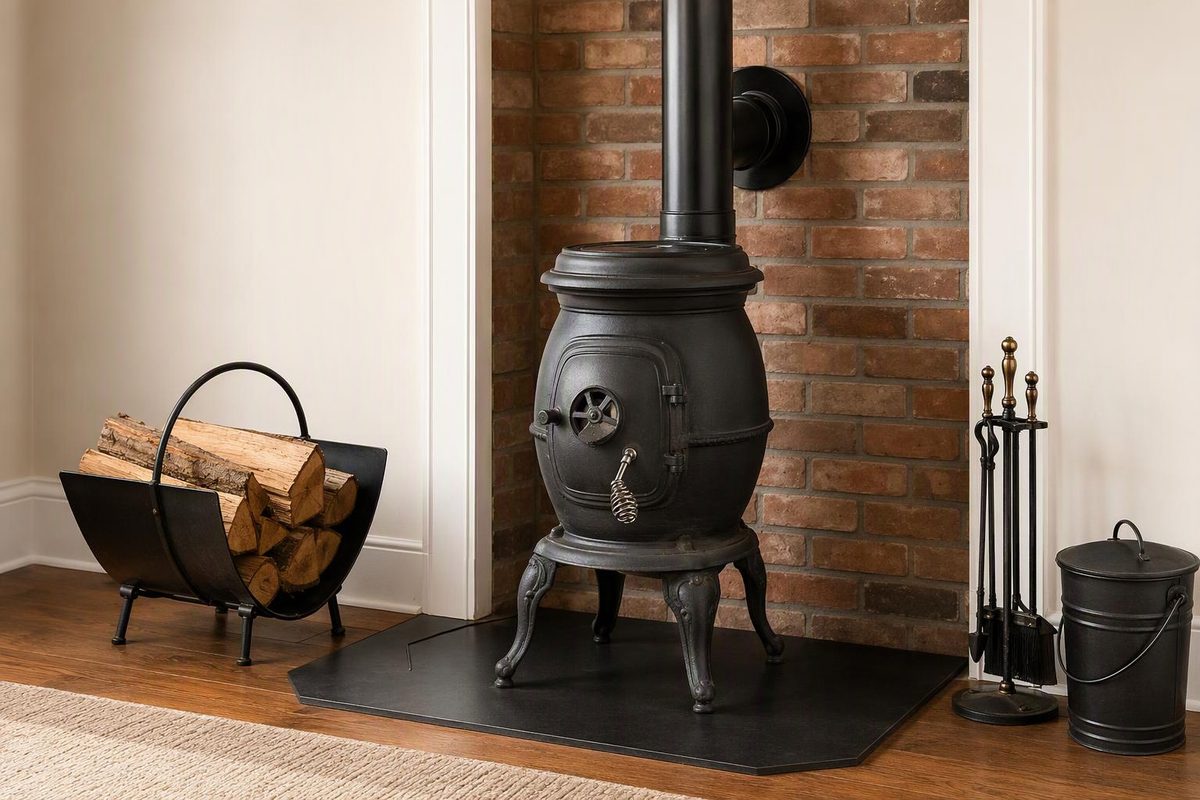
A potbelly stove is a freestanding heater with a rounded, bulging body, commonly made from cast iron. Its shape does not establish its permitted fuel or whether it can be installed in your home. Before buying or lighting one, identify the exact stove, obtain its fuel and installation requirements, and verify local acceptance and a suitable chimney.
Antiques and reproductions both need those checks. History Colorado’s collection includes a pot-bellied cast-iron parlor stove with separate coal-loading and ash doors. US Stove’s Model 1869 Caboose Potbelly is coal-only. Neither wood fitting inside nor a stove looking new establishes approval to burn firewood. (History Colorado collection record, US Stove 1869 manual)
Select what you have verified; the tool identifies the next decision before you commit to the stove.
Pre-Purchase Decision Check
Hold: Identify the Stove First
Establish the exact appliance, permitted fuel and matching installation requirements. Do not test-fire it to discover what it can burn.
This screens purchase decisions, not permission to light a fire. Condition, parts, clearances, hearth, connector and combustion-air requirements still need verification and installation acceptance.
Sources: US Stove Model 1869 manual; Portland stove-installation guidance; Lincoln chimney guidance, linked in the article. Model 1869 requirements are not universal potbelly-stove specifications.
Identify the Stove and Its Permitted Fuel
Photograph any permanent label, maker’s name and model markings. Obtain the manual matching the exact appliance, then establish the permitted fuel, safety listing, installation requirements and required parts. The instructions should identify clearances, floor protection, flue size, combustion-air supply and any required draft controls. Check that the grate, doors, legs, lid and other required components are present and correct.
The US Stove 1869 manual prohibits wood except for coal ignition, prohibits installation in a mobile home or trailer, and states that the appliance is not a listed stove. Those restrictions apply to that model; they are not rules for every potbelly stove. A new reproduction is not necessarily safety-listed.
If you want firewood heat, choose an appliance expressly approved for wood. Our guide to verifying an EPA-certified wood stove explains the label and database checks.
If the fuel or installation requirements cannot be established, do not test-fire the stove to find out. Ask the manufacturer, a qualified hearth professional and the local building authority whether that exact appliance can be accepted.
Clearances and the Hearth Determine Whether It Fits
The stove body is only part of the installed footprint. Allow for wall clearances, connector-pipe clearances, floor protection and access to the loading and ash doors.
The following measurements are examples for the US Stove 1869—not a layout for an unidentified antique:
| Requirement | Model 1869 Minimum |
|---|---|
| Rear combustible-wall clearance | 36 inches |
| Side combustible-wall clearance | 36 inches |
| Floor protection beyond door side | 18 inches |
The complete floor-protection instructions and diagrams still apply. These measurements alone are not an installation plan. (US Stove 1869 manual)
Local authorities may distinguish between antique, unlisted and listed appliances. Portland, Oregon, publishes different clearance requirements for those categories and directs antique-stove owners to its inspection staff. Check your own jurisdiction before committing to a stove.
Brick, stone or tile facing does not automatically make a wood-framed wall noncombustible; heat can pass through the facing. A clearance reduction needs an accepted shield arrangement, not merely decorative masonry. Likewise, a hearth must meet the appliance’s floor-protection requirements, rather than simply look fireproof. (Portland installation, wall and floor guidance)
Verify the Chimney Before Connecting the Stovepipe
The connector is the pipe between the stove and chimney. It is not a substitute for the chimney through the building.
For the 1869, the manual requires an approved masonry chimney or a UL 103 HT factory-built chimney. It prohibits aluminum Type B gas vent and requires a dedicated flue rather than one serving another appliance. The connector cannot pass through an attic, floor, ceiling or similar concealed space. The manual also requires an outside-air supply to the room for proper combustion. These are model-specific requirements, not specifications to transfer to an unidentified antique. (US Stove 1869 manual)
Have an existing chimney evaluated before connecting the stove. An available opening does not establish a suitable liner, condition or construction. Lincoln, Nebraska’s building department calls for inspection of unused or existing chimneys and identifies cracked liners, blockage and deterioration as potential reasons for failure. (Lincoln chimney guidance)
No verified chimney route means no fire. Include chimney work in the purchase decision even when the stove itself is inexpensive.
Inspect a Used Stove Before Paying for Restoration
With the stove cold, inspect for cracked castings, loose legs, damaged doors, a missing lid, deteriorated seams and a warped or incomplete grate. These observations identify reasons for professional evaluation; they do not amount to a homeowner safety certification.
The 1869 manual explains that its cast-iron construction has no welded seams and may need stove cement or mortar renewed. Fresh paint does not establish sound joints or castings. Check parts availability before assuming a defect can be repaired. Our cast-iron stove buying checks cover the broader inspection.
Follow the Exact Operating Limits After Installation
Once the installation is accepted, use the exact manual for lighting, refueling, air controls and chimney inspection. Do not borrow a wood-stove firing routine for a coal-only potbelly stove.
The 1869 manual prohibits unattended operation. A glowing or red stove or connector indicates overfiring, not normal operation; smoke spillage must be corrected before further use. It calls for chimney and connector inspection at least twice monthly during the heating season, with buildup removed. Ashes belong in a metal container with a tight-fitting lid, on a noncombustible surface away from combustible materials, until all cinders have cooled. (US Stove operating and ash-disposal instructions)
Both wood and coal can produce carbon monoxide. CPSC recommends annual professional heating-system inspection, including chimneys and flues, and CO alarms on every level and outside sleeping areas. If a CO alarm sounds, move outside immediately, call emergency services and do not reenter until responders permit it. (CPSC carbon monoxide guidance)