
Choosing a Vermont Castings Wood Burner
Compare Vermont Castings wood-stove models, top loading and combustion controls, then check chimney fit, maintenance and used-stove condition.
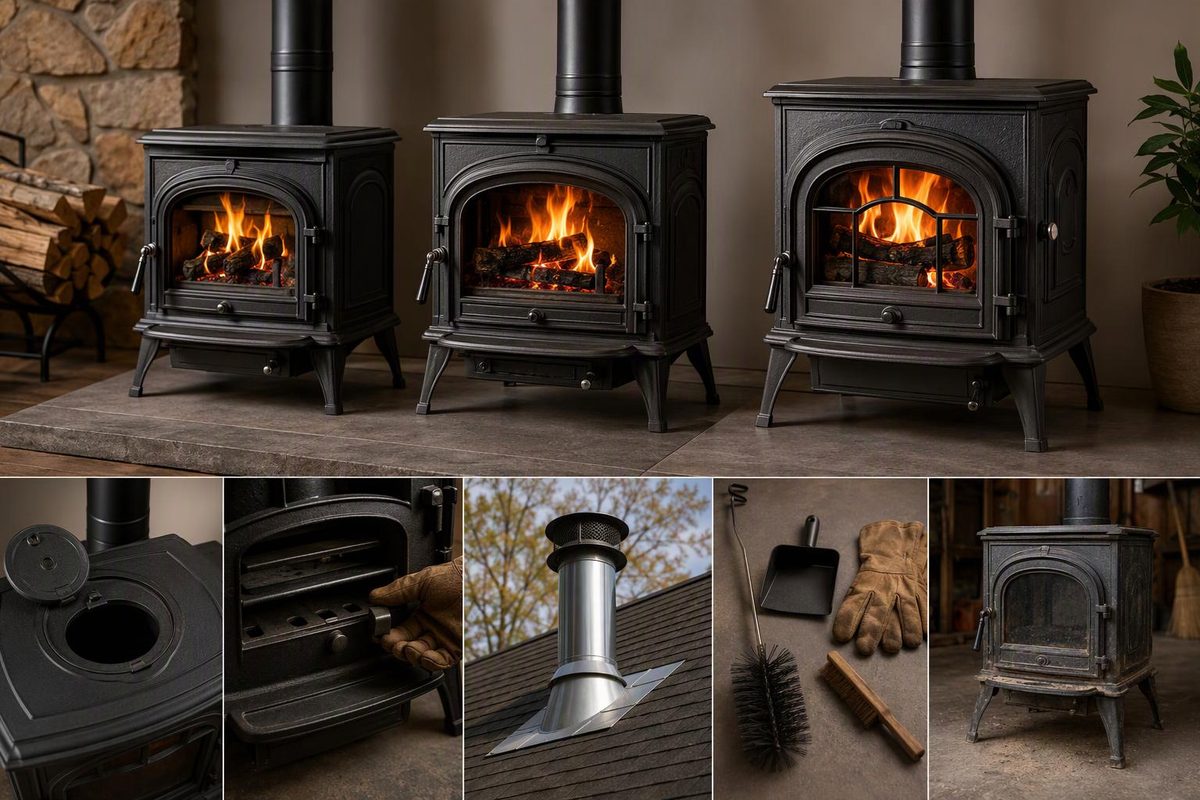
Vermont Castings wood burners differ in controls, loading convenience and heating capacity. Start with the exact model and chimney fit—not the enamel color or the largest advertised heating area.
This comparison covers the manufacturer’s U.S. range: Aspen C3, Intrepid FlexBurn, Dauntless, Encore and Defiant. For a used stove, identify the model number before applying any current specifications.
Check the installation before choosing the model
Have the installer match the stove’s label and installation manual to your chimney, hearth and available clearances, and confirm local approval requirements. Vermont Castings specifications are not interchangeable across the range.
For example, the Defiant 1975-CAT-C installation manual describes approved configurations with either a 6-inch or 8-inch flue connection. It also warns that oversized chimney liners can cool the smoke and reduce draft. An existing large fireplace chimney is therefore not automatically a suitable connection simply because the stove can physically fit beside it. The same manual says this model is not approved for mobile homes in the United States or Canada. Defiant installation manual
Ask for a layout showing the stove, connector, chimney transition, hearth protection and any required heat shields. Keep room above a top-loading stove to open the griddle and handle firewood comfortably. For the broader planning sequence, see our log burner installation checklist.
Plan for a supply of properly seasoned firewood, too. The Encore manual specifies natural wood only and describes seasoned firewood as having moisture content below 20 percent; it prohibits construction materials and wax-containing artificial logs. Encore fuel instructions
Compare the current wood-stove range
These are the manufacturer’s U.S. product-page figures checked on October 31, 2026. The heating areas are advertised “up to” figures, not a heat-loss calculation.
| Model | Advertised heating area | Starting stove price, USD | Main distinction to investigate |
|---|---|---|---|
| Aspen C3 | 1,200 sq ft | $1,999 | Continuous combustion control without manual air adjustment |
| Intrepid FlexBurn | 1,400 sq ft | $3,089 | Smaller stove with top loading, ash-removal system and optional catalytic performance pack |
| Dauntless | 1,600 sq ft | $3,699 | Cast-iron griddle and optional cooking grill |
| Encore | 2,200 sq ft | $4,169 | Top loading, swing-out ash pan and thermostatically controlled combustion |
| Defiant | 2,600 sq ft | $4,819 | Larger advertised capacity with top loading, swing-out ash pan and thermostatic combustion control |
The manufacturer says actual suitability depends on climate, home efficiency, stove location and air movement. Its starting prices exclude delivery, installation, venting, finishing materials, accessories and taxes. Compare complete installed quotes, including the chosen finish and combustion package, rather than these base prices alone.
A practical shortlist:
- Compare Aspen and Intrepid when looking for a smaller appliance. The key ownership difference is no manual air adjustment versus top-loading convenience and a catalytic option.
- Include Dauntless if you want its griddle or optional cooking grill. Have the dealer explain the exact catalytic or non-catalytic configuration being quoted.
- Compare Encore and Defiant for their larger advertised heating capacities. Do not choose Defiant merely to gain reserve capacity; establish that its heat output and installed footprint suit the building and room.
Understand the controls you will actually use
“Thermostatically controlled” does not mean the stove operates like a wall-thermostat furnace. On the Encore 2040-CAT-C, you manually set the primary air lever; a bi-metallic thermostat then regulates that air supply during the burn. A separate bypass damper directs the exhaust either toward the chimney or through the secondary combustion system. The manual requires the bypass to be open for starting or reviving a fire and whenever the griddle or doors are opened. Encore operating manual, appliance controls
Before buying, ask the dealer to demonstrate the cold controls and explain the startup, refueling and any catalyst-temperature checks for the exact stove. Do not assume a FlexBurn name makes the catalyst optional on every Vermont Castings model or generation. Match the supplied combustion components and operating instructions to the appliance label.
Top loading and a separate ash pan can make daily handling easier, but the ash door is not a startup air control. The Encore manual explicitly warns that operating with it open can overfire the stove and cause a house fire. Encore ash-door warning
Budget for maintenance—and inspect a used stove internally
The ownership commitment extends beyond sweeping the chimney. The Encore manual calls for checking the catalyst for fly ash and physical damage two to three times a year, and inspecting the chimney system every two weeks during the heating season. These are that manual’s intervals; use the schedule supplied with your exact stove. It also identifies ash accumulation behind the combustion package as an annual cleaning item. Encore maintenance schedule
For a used Vermont Castings stove, request:
- A readable label photograph with model number, serial number and manufacture date.
- Inspection of the catalyst, where fitted, and the internal combustion package and passages—not just the exterior finish.
- Checks of the griddle, door and damper seals, latches, glass and castings.
- A parts-and-labor estimate for anything worn, damaged or missing before agreeing on a price.
These seals are service items. The Dauntless manual explains that its rope gaskets can become brittle or compressed and require replacement; it also prohibits operating with damaged door glass. Do not light a used stove until safety defects and installation requirements have been addressed. Dauntless maintenance instructions
Send the label and inspection findings to a Vermont Castings dealer for parts identification and availability. The manufacturer identifies its dealer network as the preferred source for products, parts and accessories. A low purchase price is only useful once you know the cost of restoring—and safely installing—that particular stove. Vermont Castings parts guidance