
Choose a Cast Iron Stove by Model, Condition and Fit
Check a cast iron stove’s construction, used-stove defects, hearth requirements and chimney compatibility before buying it or lighting your first fire.
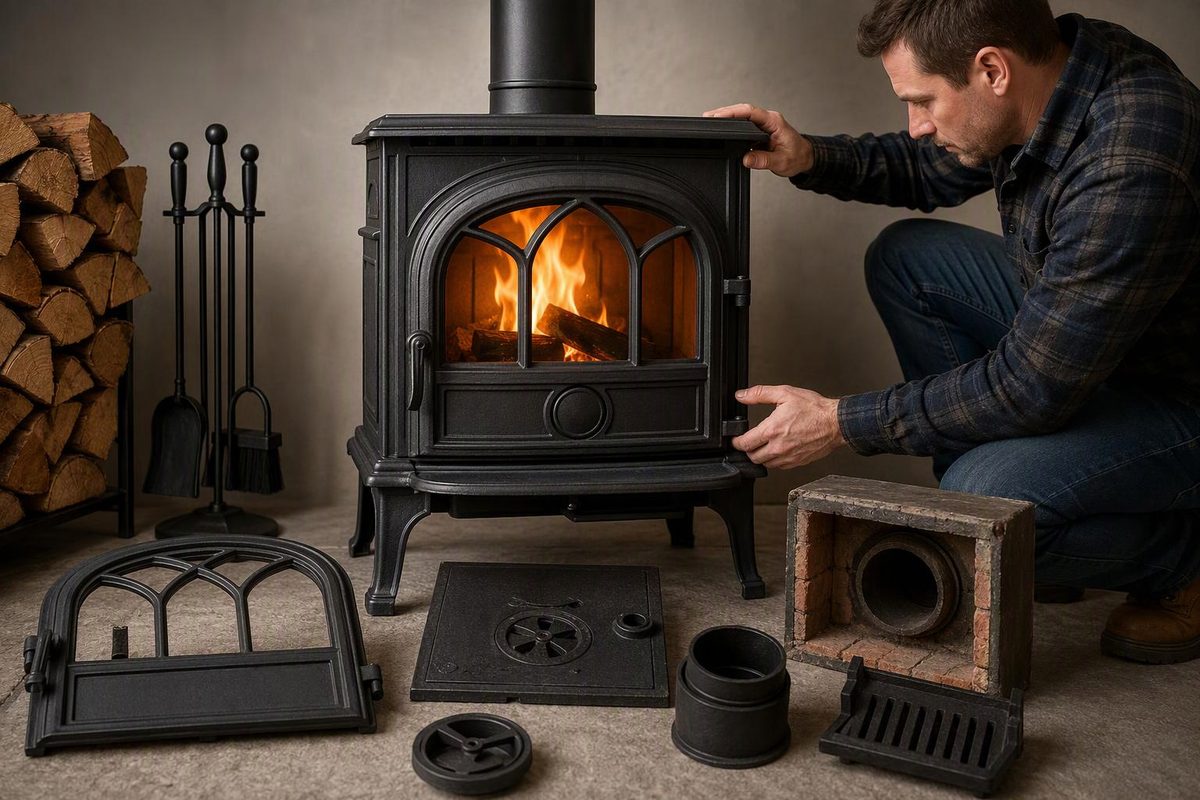
A cast iron stove can be a good wood heater, but cast iron is a construction material—not an efficiency rating, fuel specification or installation approval. Choose by the exact model, its condition and whether its required clearances, hearth and chimney system fit your home. Do not light an unidentified stove or one with a suspected firebox crack.
Select what you have verified; the tool shows which checks still block first use.
First-Use Check
Do Not Light Yet
Verify the exact model and manual, inspect the cold stove, and confirm the installation and chimney requirements.
This check does not approve an installation. A suspected firebox crack or unknown repair needs a qualified stove technician.
Source: Jøtul F 602 V3 and Alderlea installation manuals cited in the article. Requirements remain model-specific.
This guidance concerns wood-burning room heaters. For an existing stove, start with the rating plate rather than its appearance: record the manufacturer, full model designation and serial number, then obtain the matching manual.
Cast Iron Construction Does Not Establish Heating Performance
Two stoves with similar cast iron exteriors can have different firebox construction.
| Construction | What to Identify | Service Implication |
|---|---|---|
| Cast iron firebox | Separate joined and sealed cast plates | Inspect castings and firebox joints |
| Cast-clad steel firebox | Steel chamber beneath cast panels | Exterior panel joints may not be firebox seals |
| Welded steel stove | Welded body, possibly a cast door | Inspect welds and internal parts |
For example, the Jøtul F 602 V3 manual describes cast iron plates sealed with furnace cement. Pacific Energy describes its Alderlea T5 Classic LE as cast iron over a steel firebox. Those are construction examples, not interchangeable maintenance instructions. (Jøtul manual, section 5.7; Pacific Energy specifications)
The non-commercial Wood Heat Organization explains that cast iron versus welded steel is principally an aesthetics-and-price choice, not an inherent heating-performance advantage. It also highlights joint resealing in traditional cast stoves and the importance of replaceable, highly stressed internal parts in either construction. (Wood Heat Organization buying guide)
Do not treat “holds heat longer” as proof of higher efficiency or an overnight burn. Compare the actual models: tested efficiency, usable heat output, firebox size, combustion system and service requirements. No model-specific efficiency figures are provided here.
In the United States, the EPA Certified Wood Heater Database allows searches by model, heater type, efficiency and emissions. For help keeping those measurements separate, see our wood-stove efficiency comparison guide.
Establish the Full Installation Footprint Before Buying
The stove’s physical dimensions are only part of the space it needs. Have the installer map the following requirements from the matching manual; there is no universal cast iron stove clearance or hearth size.
| Requirement | What the Plan Must Establish |
|---|---|
| Stove clearances | Rear, side, corner, ceiling, mantel and trim restrictions |
| Connector clearances | Requirements for the selected single-wall or listed double-wall connector |
| Floor protection | Dimensions, ember protection and any thermal-protection requirement |
| Approved shields | Permitted stove or wall shields and their installation details |
| Chimney system | Diameter, compatible liner or factory-built chimney, route and inspection needs |
Do not assume brick, tile or stone covering a wood-framed wall makes it noncombustible. The F 602 V3 manual explicitly includes combustible materials behind noncombustible finishes when addressing clearances. Its clearance tables also change with connector and shielding arrangements; use the table for the proposed installation, not whichever entry offers the smallest distance. See section 4 of the Jøtul manual linked above.
Stovepipe is not the chimney. The Alderlea manual distinguishes the connector from the chimney and warns against passing the connector through a combustible wall or ceiling. Plan the approved transition and chimney components before committing to a stove location. Confirm permits and inspection requirements with local building or fire officials. (Alderlea installation manual)
If reusing an existing chimney, arrange an inspection before installation; the F 602 V3 manual expressly requires this in its safety notices. A stove that looks sound does not establish that the chimney is suitable.
Our woodburner installation planning guide covers how the appliance, hearth and vent path fit together.
Inspect a Used Stove’s Castings, Seals and Internal Parts
Ask for photographs of the identification plate and the cold, accessible firebox before traveling to inspect a used stove. The matching manual and parts diagram determine what should be present and how it should be sealed.
| Inspection Point | Defects to Check |
|---|---|
| Cast plates and seams | Cracks, gaps or missing cement at specified cemented joints |
| Doors, hinges and latches | Damage or poor closure |
| Door and glass gaskets | Deterioration or missing sections where gaskets are specified |
| Burn plates, baffles, liners and catalyst, if fitted | Damage or missing parts |
| Replacement parts | Availability of correct parts, not similar-looking substitutes |
Do not add gasket simply because an edge appears unsealed. For example, the F 602 V3 manual specifies that the top of its glass is not gasketed, allowing air to enter there to help keep the glass clean. That detail applies to this model; it is not permission to remove a gasket from another stove. See sections 6.5–6.7 of its manual.
The same manual calls for an annual inspection of seams and castings. Section 6.1 distinguishes replacing cracked parts from repairing cement leaks with furnace cement. A bead of cement over a cracked casting is not the same repair.
Stop before lighting if the firebox has a suspected crack, the stove cannot be identified, or the repair method is unknown. Have a qualified stove technician establish what needs replacement and whether the installation can be approved. Fresh paint does not resolve those questions.
Before purchase, ask the dealer or service provider to identify the correct replacement parts and their prices. No replacement-part prices are supplied here; availability and cost need checking for the particular model.
Follow the Model’s Break-In and Cleaning Instructions
Follow the model’s break-in procedure rather than using a generic temperature schedule. The F 602 V3 manual explains that its cast iron construction requires gradual break-in to avoid overly rapid thermal expansion.
Its safety notices also warn that glowing stove or connector surfaces indicate overfiring and can lead to serious damage or a house fire. The catalytic combustor is an explicit exception to that glowing-part warning. Do not extend that exception to the stove body or connector. The applicable break-in instructions are in section 5.7 of the manual.
For exterior care, identify whether the finish is painted or enameled before choosing a cleaner, and clean only when the stove is cold. Jøtul recommends dry dusting for routine cleaning and cautions against abrasive cleaners on painted surfaces and excessive water on cast iron, which can cause rust spots. (Jøtul cleaning guidance)
Before buying, ask the dealer to show you the maintenance access points. A stove that fits the room still needs accessible service points and obtainable parts for the components its manual requires you to inspect or replace.