
A Small Combustion Stove Needs More Than a Small Footprint
Choose a small combustion stove by its approval, clearances, hearth, flue and usable heat output—not just its body size or advertised heating area.
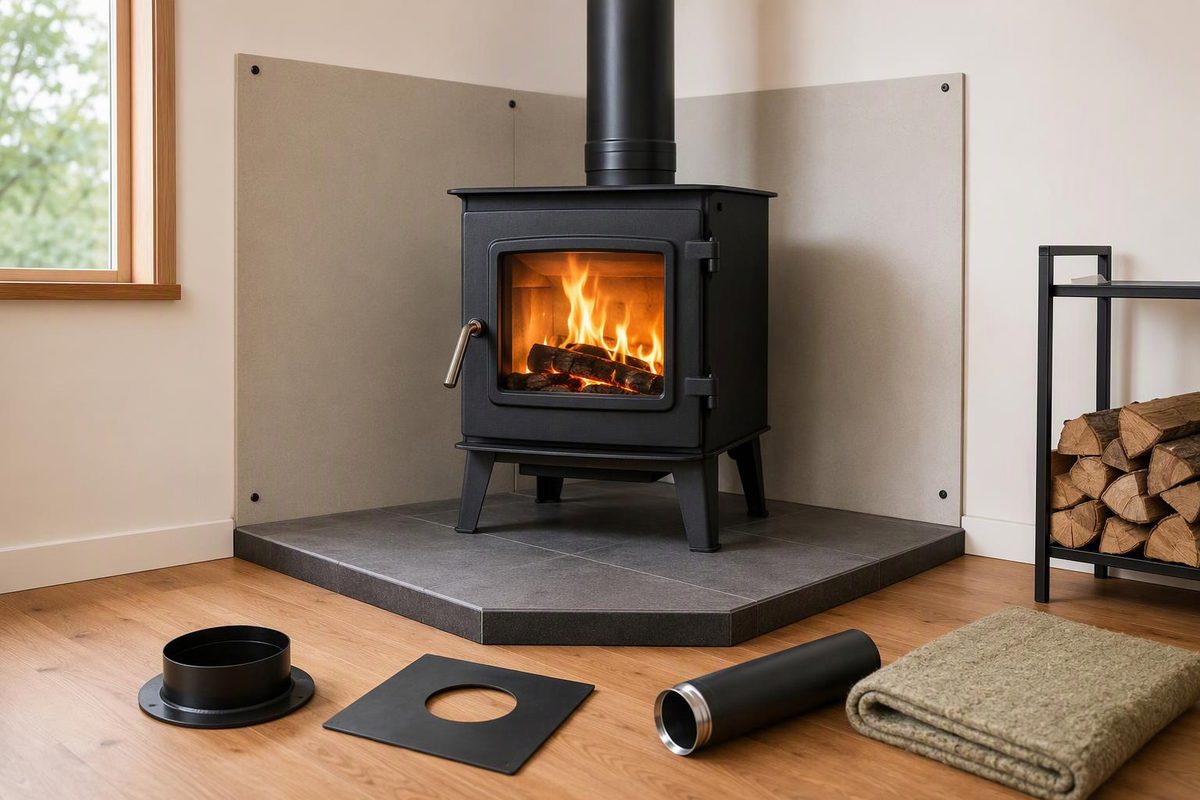
This guide covers a small combustion stove used as a compact enclosed wood-burning home heater. The important distinction is between a stove that is physically small and one that delivers suitably low heat. They are not necessarily the same appliance.
Before comparing appearance or price, check whether the exact stove is approved for your installation, whether its clearances and flue fit the building, and whether it can heat the intended space without routinely overheating it.
1. Start with the exact model and its approval
Ask for the permanent appliance label and the matching installation and operating manuals. A model name alone is not enough: different generations, bases, heat shields and regional versions can have different requirements.
Check:
- Permitted fuel and installation setting: a residential room, manufactured home or other setting must be covered by the applicable documentation.
- Safety listing or compliance marking: use the requirements applicable where the stove will be installed.
- Local permission: confirm permits, inspection requirements and any restrictions on installing or using wood heaters with the relevant building and air-quality authorities.
In the United States, check the exact wood-heater model in the EPA Certified Wood Heater Database. That verifies emissions certification; it does not replace the separate safety-label and installation checks. EPA’s stove-selection guidance also calls for safety labelling, though that Burn Wise page is now a historical resource.
Stop before buying if the seller cannot identify the stove or provide its matching documentation.
2. Measure the installed space—not just the stove body
Draw the stove, hearth and flue route on a room plan. Include nearby walls, trim, furniture, curtains, doorways and the space needed to open the loading door safely.
A compact appliance can still need substantial separation from combustible surfaces. For example, Nectre’s Australian N15 Legs product sheet, dated February 2026, lists a body measuring 462 mm wide × 553 mm deep × 728 mm high. Its standard-installation table, without optional stove side shields, specifies 750 mm side clearance to combustible walls. Between two parallel combustible side walls, that gives a width allowance of 1,962 mm: 750 + 462 + 750. This calculation describes that particular configuration, not a universal clearance rule or a complete installation footprint. The table also specifies the permitted flue shielding configurations. See the N15 product sheet.
The same model’s Australian installation manual specifies a minimum 900 × 900 mm floor protector where one is required, with material and thermal-performance requirements. Optional shields change some clearances, with separate tables for different configurations.
The practical lesson: small body dimensions do not establish a small safe installation area. Do not assume decorative tile, brick veneer or a homemade shield permits reduced clearances.
Also have the installer verify:
- The hearth’s required extensions and whether it needs thermal protection, not just ember protection.
- The flue diameter, connector type, clearances, supports and roof termination.
- Whether roof framing obstructs the proposed route.
- Whether an existing chimney is suitable and serviceable.
- Combustion-air requirements and the effect of exhaust fans.
For the broader planning sequence, use our woodburner installation guide.
3. Match usable heat output to the room
Treat advertised heating area as a screening figure, not a sizing calculation. Nectre’s product sheet explicitly says its coverage guide depends on insulation, window area, ceiling height, geographical location and house layout. Despite its compact body, the N15 is advertised to heat up to 160 m²—a useful illustration of why “small” need not mean low-output.
Give the dealer or installer your floor plan, ceiling heights, insulation details, climate and intended use. Distinguish occasional living-room heat from primary heating for a whole home.
Ask for the stove’s tested heat-output range, especially its low end, and how it operates cleanly in mild weather. Compare like-for-like ratings using our wood-stove efficiency and output guide.
An oversized stove can encourage excessive air restriction to keep the room comfortable. Cornell Cooperative Extension explains that underfiring reduces combustion efficiency and accelerates creosote formation; an undersized stove can tempt owners to overfire it. Neither is a sound sizing strategy. This is different from following a stove’s approved low-output operating procedure: the N15 operating manual, for example, explains how to reduce output while maintaining cleaner combustion.
4. Check the fuel and loading routine
Before purchasing, confirm the recommended log dimensions—not merely the largest piece that fits through the door—and the expected reload interval at your required output.
For example, the N15 operating manual recommends seasoned hardwood below 20% moisture, with pieces no longer than 250 mm and no more than 150 mm in diameter for best results. Those recommendations are model-specific.
Choose a stove whose fuel preparation and loading routine you can sustain. Wet wood is not a way to moderate heat: Connecticut DEEP’s January 2026 guidance warns that it burns inefficiently and creates excessive smoke.
Before committing to a quote
Request an itemised proposal covering the exact stove, shields, hearth construction, connector and chimney or liner system, combustion-air provisions, permits and inspection. Compare the complete installed system, not appliance prices alone.
Have the heating system, including the chimney and vents, inspected and serviced annually by a trained technician. Install battery-operated CO alarms or alarms with battery backup on every level and outside sleeping areas, as recommended by the U.S. Consumer Product Safety Commission.